




Packing for kids often feels heavier than packing for adults, even when the suitcase size is the same. The reason is not just the number of items, but the way parents think during the process. There is always a quiet concern in the background: what if something is missing at the wrong moment? That concern is what pushes many families to overpack without realizing it.
The problem is that more items rarely mean more comfort. In many cases, they create the opposite effect. A crowded suitcase makes it harder to find things, slows you down during the trip, and adds unnecessary stress in small daily situations. What actually works better is a simpler approach built around how kids really behave during travel, not how we imagine they might behave.
If you want to see how this approach fits into a full packing system, you can connect it with How to Pack a Suitcase for a Family Trip (Step-by-Step Guide), where everything is structured from start to finish.
Start with Real Daily Needs, Not “What If” Scenarios
Most packing decisions for kids are driven by hypothetical situations. Parents imagine weather changes, unexpected messes, or activities that may never happen, and the suitcase slowly fills with “just in case” items. While this feels reassuring at first, it usually leads to carrying things that are never used.
A more effective way to think about packing is to focus on a normal day. What does your child actually wear, use, and need over a few hours? Once you answer that honestly, you can build your packing around repetition rather than variety. Clothes can be worn more than once, items can serve multiple purposes, and small adjustments can replace entire categories of things.
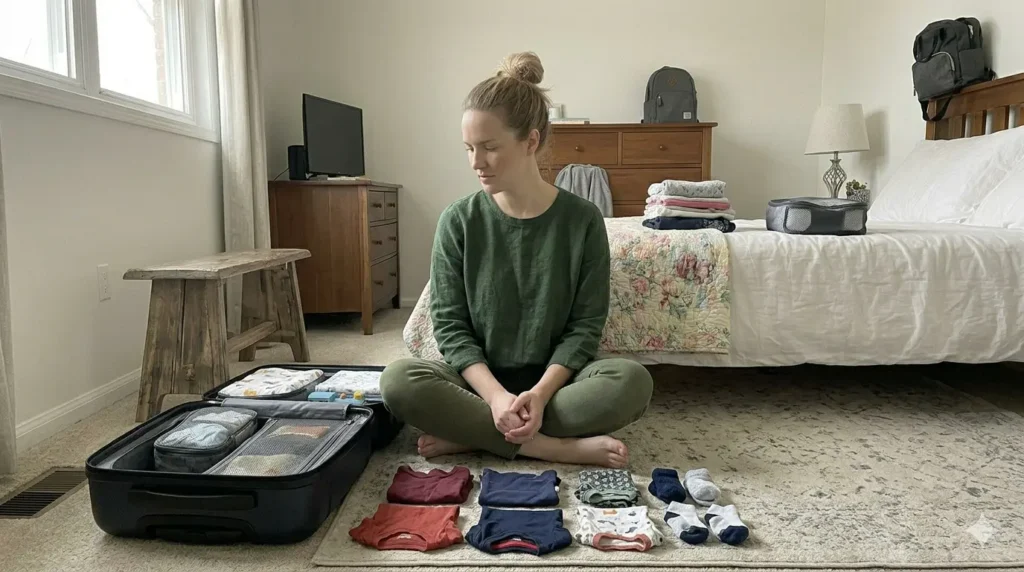
This shift alone reduces a large part of unnecessary packing without increasing risk.
Clothing: Why Less Options Often Work Better
Clothing tends to take the most space, and it is also where overpacking happens the fastest. It is easy to assume that kids need multiple outfit choices, but in reality, they usually return to the same comfortable pieces.
Instead of thinking in terms of “outfits for every situation,” it helps to think in terms of combinations. A few items that work well together can cover several days without feeling repetitive. Soft fabrics, easy layers, and practical choices matter much more than variety.
A small rotation is usually enough:
- A few everyday outfits that can be mixed
- One warmer layer for changing temperatures
- Sleepwear and enough underwear for comfort
- Weather-specific items depending on the destination
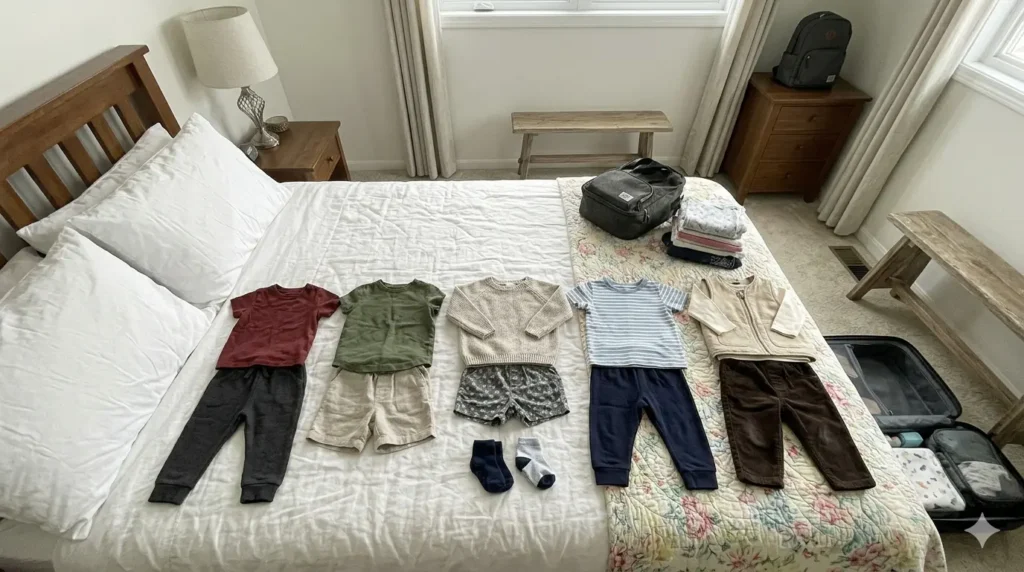
Keeping one extra outfit accessible, especially during travel days, often solves situations that would otherwise feel stressful. It is a simple habit, but it makes a noticeable difference.
Comfort Matters More Than Entertainment
One thing many guides get wrong is focusing too much on keeping kids busy. While entertainment can help, what children need most during travel is a sense of comfort and familiarity.
Long hours, new environments, and changes in routine can feel overwhelming, especially for younger kids. A familiar object, like a small blanket or a favorite toy, often helps kids settle much faster in new environments, especially during long travel days or when routines suddenly change.
This is why a small comfort kit works well. It does not need to be large or complicated. Even a few familiar items can make transitions smoother and reduce stress in unexpected moments.
The Small Items That Prevent Big Problems
Many of the most stressful moments during travel come from very small things. Hunger, discomfort, or not having something within reach can quickly affect a child’s mood, and from there, the whole experience.
This is where a few simple items make a big difference. Snacks, for example, are not just about food. They are about timing and control. Having something ready when needed avoids relying completely on external options that may not always be available.
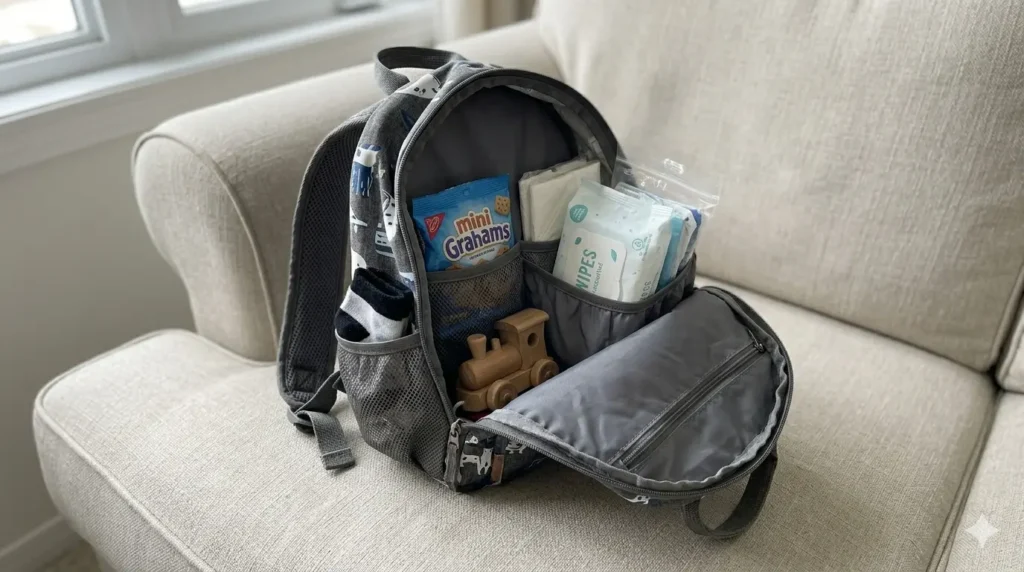
The same applies to items like wipes, tissues, or basic medication. They are rarely used all the time, but when they are needed, they become essential immediately.
A practical way to think about it is this: anything you might need quickly should not be inside your main suitcase.
- Snacks your child already likes and is used to
- Wet wipes and tissues for quick cleanups
- Basic medication for common situations
Organization Is What Makes Packing Actually Work
Even a well-packed suitcase can become frustrating if there is no system behind it. The first day usually feels organized, but after that, things start to mix together, and simple tasks take longer than expected.
For families, this becomes more noticeable because you are not just looking for your own items, but for multiple people at once.
Instead of organizing by person, it often works better to organize by function. Grouping similar items together makes it easier to adapt during the trip and reduces the need to unpack everything just to find one thing.
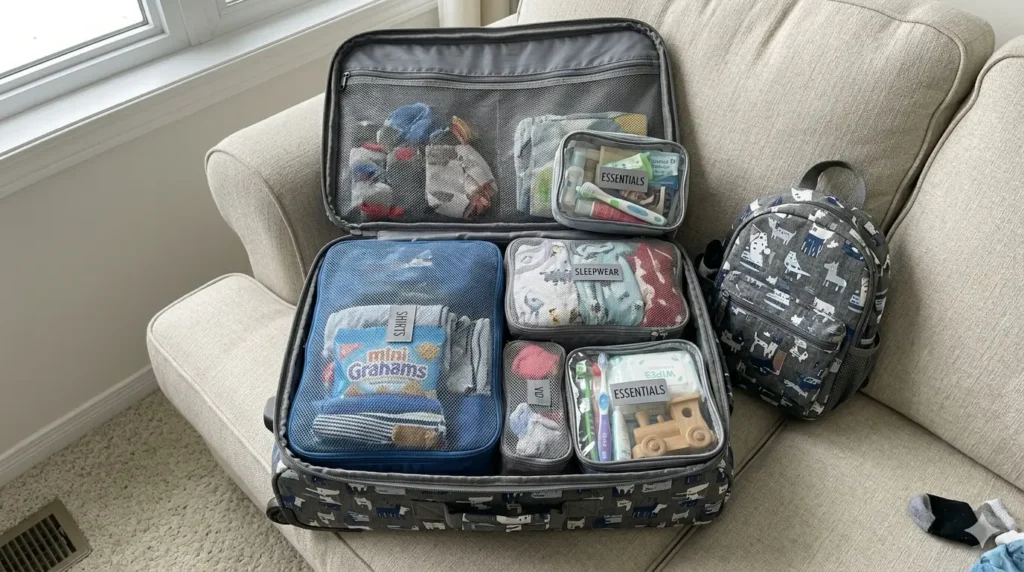
Simple tools like packing cubes or small bags help maintain that structure, but the real difference comes from the habit itself, not the tool. If you want a deeper system for this, you can explore How to Organize a Suitcase Efficiently.
Adjust Your Packing Based on Age, Not Assumptions
Children’s needs change quickly with age, and this directly affects how you should pack.
Younger kids usually require more physical support, such as extra clothing, comfort items, and routine-based essentials. Older children, on the other hand, often need fewer items but more personal space and independence in what they carry.
Applying the same packing logic to every child can either create unnecessary weight or leave gaps in what is actually needed. Adapting your approach based on age makes packing more precise and avoids both extremes.
For families traveling with babies, a more detailed approach is often necessary, which is covered in How to Pack Baby Essentials for Travel.
Why Overpacking Feels Safe (But Makes Travel Harder)
Overpacking is rarely a mistake. It is usually a reaction to uncertainty. It feels safer to bring more, because it reduces the fear of being unprepared. But once the trip starts, that extra weight becomes part of the experience.
Moving between places becomes harder, finding items takes longer, and even simple moments require more effort.
What makes travel easier is not having everything. It is being able to manage what you have without stress.
This is why many experienced families gradually move toward packing lighter, not because they take risks, but because they trust their ability to adapt when needed. If you want to build that approach step by step, you can explore How to Pack Light with Kids.
There is no perfect packing list for kids, and there does not need to be one.
Every trip teaches you something. You notice what was useful, what stayed untouched, and what you wish you had brought. Over time, these small lessons shape your own system, one that fits your family better than any generic guide.
The goal is not to eliminate every mistake, but to reduce friction. When packing feels simpler and more intuitive, the entire trip becomes easier to enjoy.