




Long flights with children can feel stressful for many parents, especially when dealing with crying, boredom, sleep difficulties, and constant movement inside the airplane. However, most of the challenges families face during travel are not caused by the flight itself, but by a lack of preparation or unrealistic expectations. That is why understanding flying with kids helps parents feel more confident and relaxed before the journey even begins.
Children experience travel very differently from adults. Airports feel crowded and overwhelming for them, long waiting times quickly become boring, and sitting for many hours on a plane can feel extremely difficult, especially for younger children. At the same time, parents are trying to manage luggage, documents, flight schedules, and children’s needs all at once, which increases stress and fatigue.
The good news is that long flights become much easier when families focus on comfort and flexibility instead of trying to make everything perfect. Simple decisions made before travel can significantly improve the overall experience, such as choosing the right flight time, preparing entertainment, packing food, and organizing sleep in a realistic way.
Choosing the Right Flight Time for Children
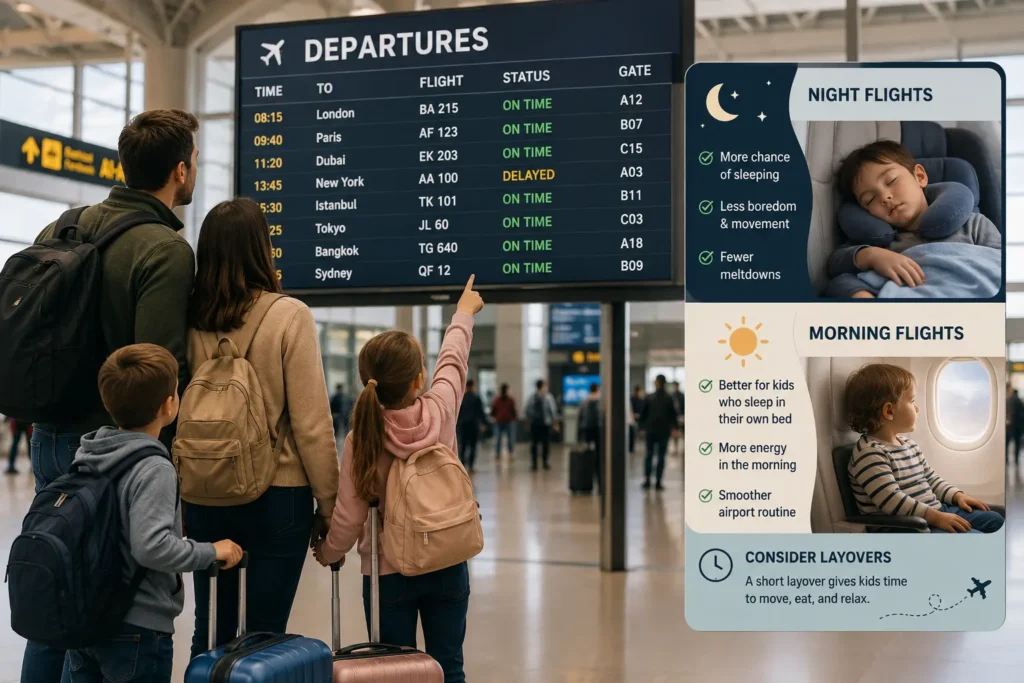
One of the most important factors affecting children’s comfort during travel is the timing of the flight. Many parents choose flights based only on price, but timing can directly influence a child’s mood, sleep, and ability to handle long hours on the plane.
Some parents prefer night flights because children may sleep for several hours, reducing boredom, movement, and crying. However, this does not work for all children. Some struggle to sleep due to noise, lighting, or unfamiliar surroundings, which can lead to tiredness and irritability later in the journey.
Morning flights may be more comfortable for some families, especially if children sleep better in their own beds. Traveling in the morning can also reduce stress caused by late-night airport routines with tired children.
It is also important to consider the total duration of the journey. In some cases, flights with a short layover are easier than spending ten continuous hours on a plane. A short break allows children to move, eat properly, and release energy before continuing the trip.
Smart Carry-On Packing
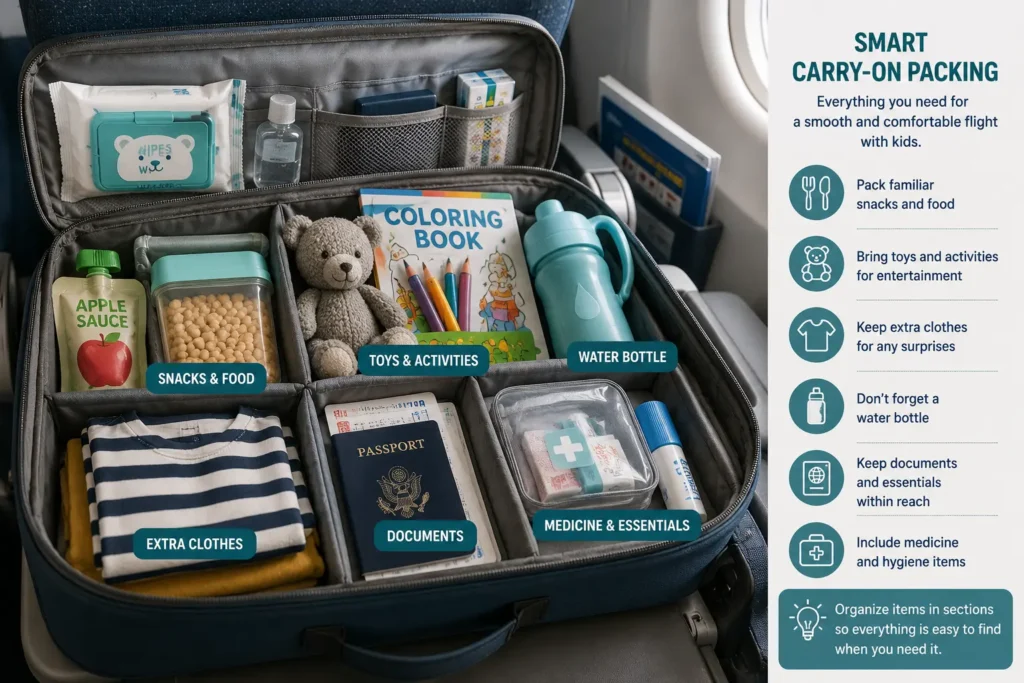
Many problems during long flights can be avoided simply by organizing carry-on luggage properly. Some parents focus too much on large suitcases and forget that the most important items are the ones needed during the flight itself. Transportation and Travel Methods can greatly influence how well a family prepares for air travel, especially when it comes to comfort and organization.
Children quickly become uncomfortable when their basic needs are delayed, such as food, rest, or entertainment. That is why the carry-on bag should include everything needed for several hours without relying completely on airline services.
Food is one of the most important things to prepare, because children do not always follow airline meal schedules. Familiar snacks help children feel more comfortable, especially if they refuse unfamiliar airplane food.
Extra clothing is also essential for both children and parents, as spills, temperature changes, or small accidents happen frequently during long flights. Having spare clothes nearby can prevent unnecessary stress.
Organizing items into separate sections also makes it easier to find essentials like wipes, medicine, toys, or passports quickly, instead of searching under pressure inside the bag.
Helping Children Sleep During Long Flights
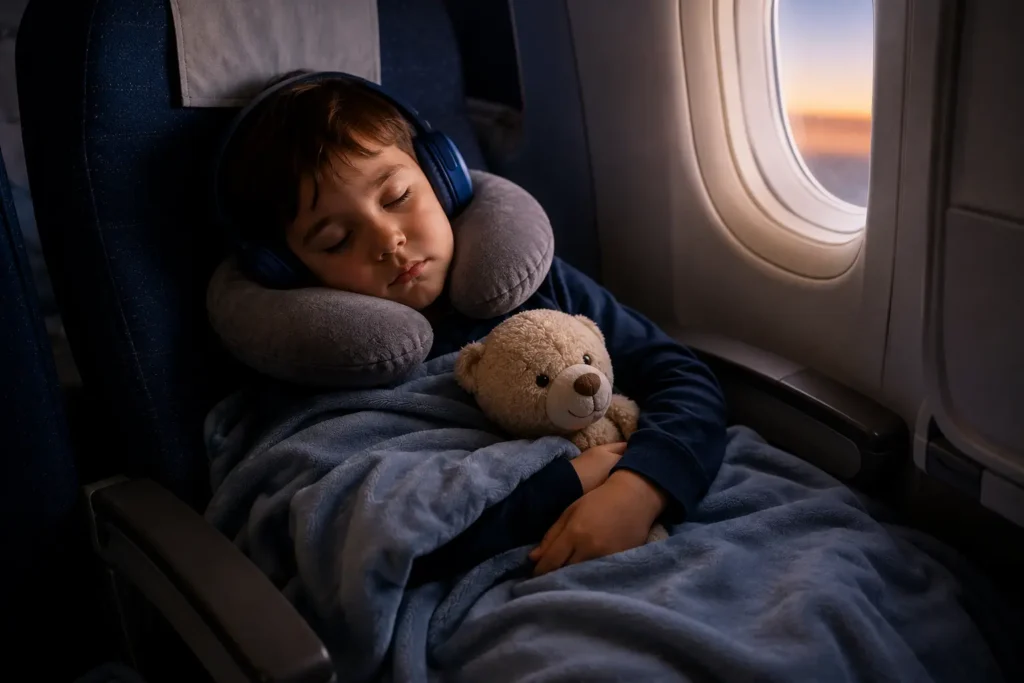
Sleep is one of the biggest challenges during long flights. A child who does not sleep well becomes tired and easily irritated, making the final hours of the journey more difficult for everyone. That is why helping children rest can completely change the travel experience.
One common mistake is trying to enforce a strict sleep schedule during travel, but flights naturally disrupt daily routines. Flexibility is more effective than control in this situation.
Comfort items from home can help children feel safe and relaxed, such as a favorite blanket, pillow, or stuffed toy. These small familiar objects make it easier for children to fall asleep in an unfamiliar environment.
It is also helpful to reduce stimulation before sleep. Too much screen time or noisy activities can make it harder for children to relax, while calmer activities help them gradually settle down.
Finally, parents should accept that sleep may not always go as planned. Some children sleep easily on flights, while others remain restless despite good preparation.
Keeping Children Entertained Without Overstimulation
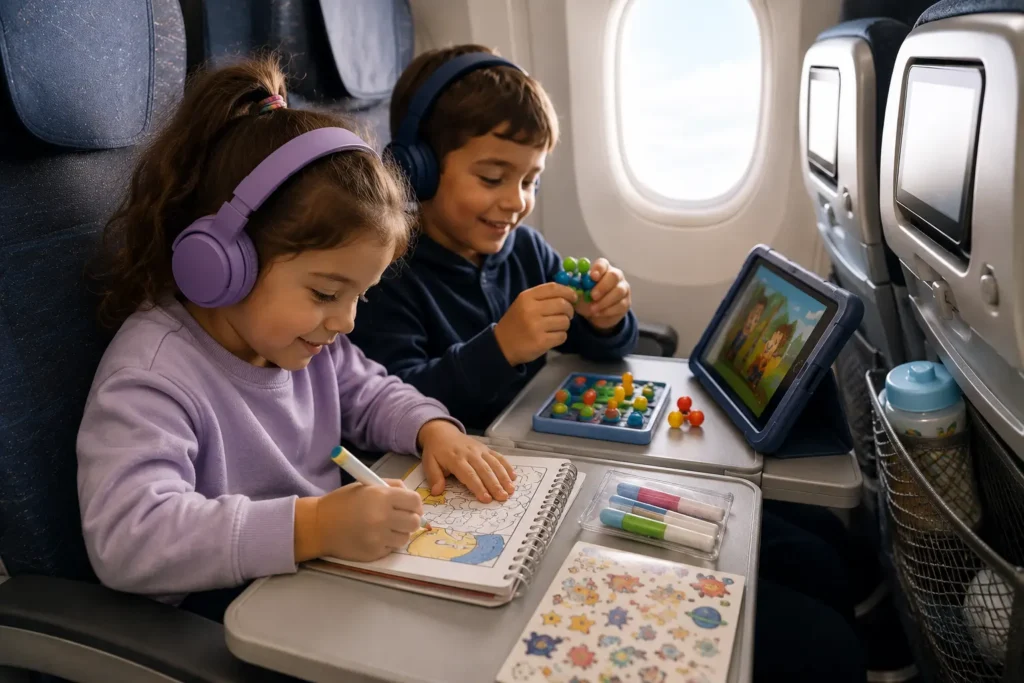
Entertainment is very important during long flights, but many parents rely too heavily on screens for long periods, which can lead to tiredness and irritability. A better approach is variety.
Switching between cartoons, drawing, simple games, snacks, and conversations helps children stay engaged without becoming overwhelmed. Introducing small new toys during the flight can also increase excitement and interest.
Younger children often enjoy interactive activities such as storytelling, stickers, and magnetic games more than long screen time. Allowing occasional movement or short walks inside the plane also helps reduce tension caused by sitting for too long.
Many parents also discover that the same activities used during flights are very helpful during How to Make Long Car Trips Fun? Ideas and Activities for a Family Road Trip, since children experience similar boredom during long hours of sitting in a car.
Handling Crying and Stressful Moments Calmly
One of the hardest parts of traveling with children is dealing with stress when a child cries or becomes upset on the plane. Many parents worry about disturbing other passengers, which increases their own stress and makes the situation harder.
In reality, difficult moments are a normal part of traveling with children. Fatigue, hunger, boredom, delays, and routine changes can all affect a child’s emotions. Staying calm usually helps more than reacting with frustration.
Children are highly influenced by adult emotions. When parents stay calm, children are more likely to calm down as well. Speaking gently, comforting the child, and staying patient usually helps the situation pass more quickly.
Situations can become even more challenging when dealing with flight delays and cancellations with children, as long waiting times at airports often increase boredom, stress, and exhaustion.
Coping with Arrival Fatigue and Jet Lag
For many families, the most difficult part of travel begins after arrival rather than during the flight. Fatigue, time zone changes, and lack of sleep can make the first days very exhausting for both children and parents.
Some parents make the mistake of planning too many activities immediately after arrival, while children usually need time to rest and adjust to the new environment. Slower first days help the whole family adapt more smoothly.
Staying hydrated, eating properly, getting sunlight, and resting well all help children adjust faster to new time zones. It is also normal for sleep patterns to remain irregular for a few days after long flights.
Long flights with children are not always easy, but they become much more manageable when parents prepare realistically and focus on flexibility rather than perfection. Good preparation for food, sleep, entertainment, and calm reactions during stressful moments can greatly reduce travel stress.
In the end, flying with kids can be challenging at times, but the memories created during family travel are often far more meaningful than the temporary difficulties. With patience and preparation, even long flights can become a more positive and enjoyable experience for the whole family.