




Packing light with kids sounds unrealistic at first. Most parents don’t overpack because they want to. They do it because they’re trying to avoid problems. What if the weather changes? What if the kids get messy? What if something important is missing? These questions start small, but they quickly turn into extra clothes, extra items, and a suitcase that feels heavier than it should.
The result is something most families recognize. You end up carrying more than you need, yet still feel unsure if you packed the right things.
But traveling light with kids isn’t about taking less randomly. It’s about making better decisions before and during packing. When you change how you think about packing, you realize that the problem isn’t the number of items. It’s the lack of a clear system.
This guide will help you simplify that process in a practical way, so you can travel lighter without sacrificing comfort or flexibility.
Why Families Overpack (And Why It Backfires)
Overpacking usually comes from good intentions. You’re trying to be prepared, so you imagine different situations and pack for each one. The problem is that most of those situations never happen, but the extra weight follows you everywhere.
What seems like a small decision at home becomes noticeable during the trip. Moving between places takes more effort, unpacking becomes frustrating, and even simple moments like finding clothes for your child can feel more complicated than they should.
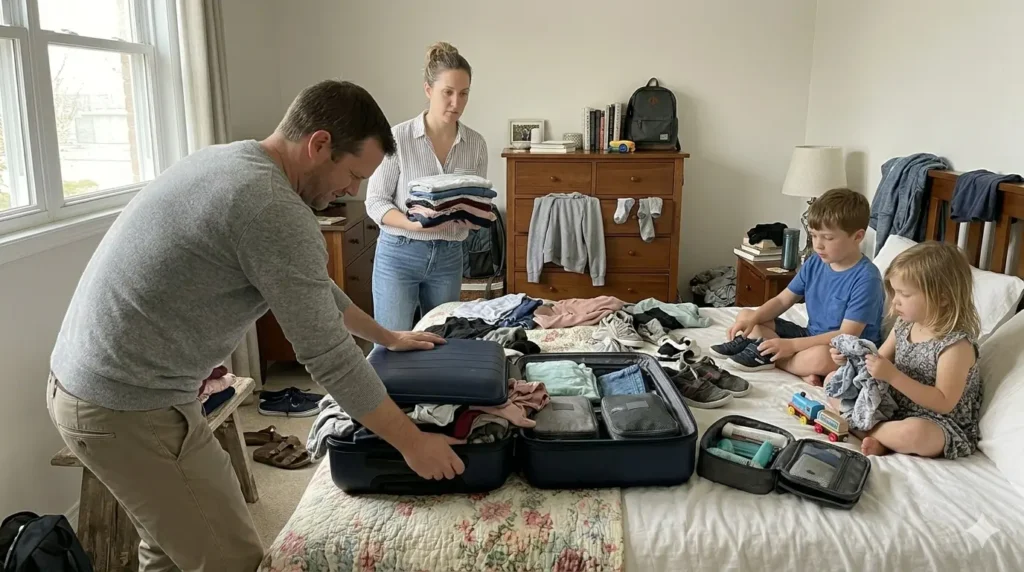
Packing light doesn’t remove preparation. It removes unnecessary pressure. Instead of trying to control every possible scenario, you focus on what actually matters during your trip.
Start With a Different Mindset
Before deciding what to pack, it helps to rethink how you approach the entire process.
Instead of preparing for every possible situation, focus on what a normal day during your trip will actually look like. Most days are simple and predictable. Kids wear comfortable clothes, eat, play, and rest. You don’t need a different outfit or item for every “what if” you imagine.
Another important shift is accepting repetition. Kids often prefer wearing the same comfortable outfit more than once, especially when they feel good in it. This alone reduces a surprising amount of unnecessary packing.
If you need a starting point, it helps to begin with a structured system like Best Packing List for Family Travel. From there, the goal is not to add more, but to remove what you don’t truly need.
Choose the Right Luggage (Avoid the “Vacuum Trap”)
Your suitcase size has more influence than most people realize. It quietly shapes your decisions without you noticing.
When you choose a large suitcase, empty space starts to feel like something that needs to be filled. You begin adding items simply because there is room, not because they are necessary. This is what you can think of as the “Vacuum Trap”. The more space you have, the more you feel the need to use it.
A smaller suitcase changes that behavior automatically. It forces you to think about priorities instead of possibilities, and that shift alone reduces overpacking without adding stress.
If you want a structured way to make everything fit within limited space, revisiting How to Pack a Suitcase for a Family Trip (Step-by-Step Guide) can help you apply the same system more efficiently.
Build Outfits, Not Individual Items
One of the easiest ways to pack less without feeling restricted is to stop thinking in individual pieces.
Packing random shirts, pants, and extras often leads to duplication. Instead, building complete outfits gives you clarity. You know exactly what you’ll wear, and you avoid adding unnecessary “backup” items.
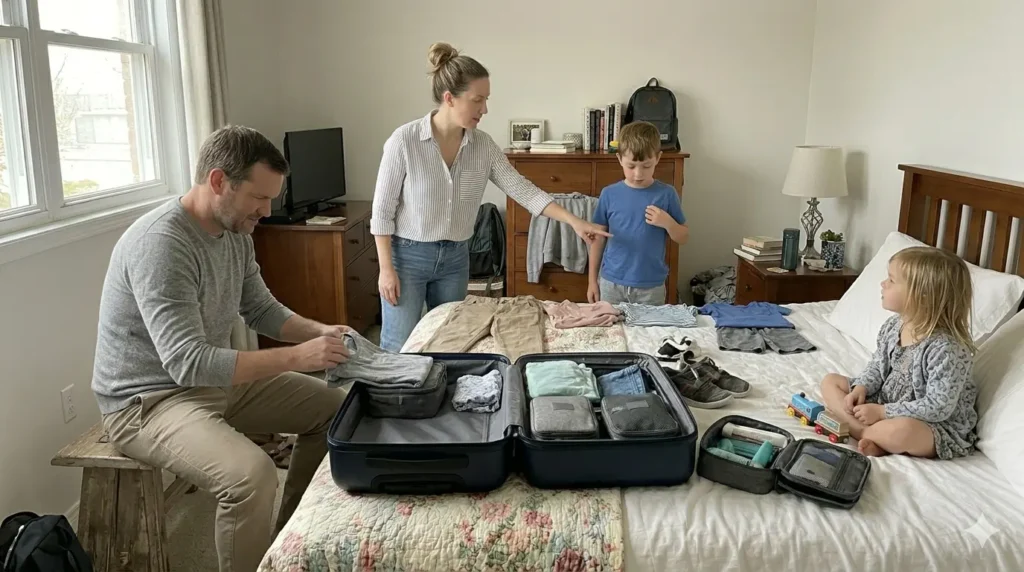
A few simple combinations can go a long way, especially when you choose neutral pieces that work together. This approach not only reduces the number of items, but also makes daily routines easier during the trip.
Instead of deciding what to wear each morning, everything is already thought through, which makes a noticeable difference when traveling with kids.
Limit Shoes and Bulky Items
Shoes are one of the most common reasons suitcases become heavy.
Most families bring more pairs than they actually use. In reality, kids tend to rotate between one or two comfortable options throughout the trip. A simple rule that works well is:
- One pair worn during travel
- One packed in the suitcase
- One optional pair for specific situations
Before packing, it helps to place all the shoes you plan to bring in front of you, then remove at least one pair. In most cases, you won’t miss it.
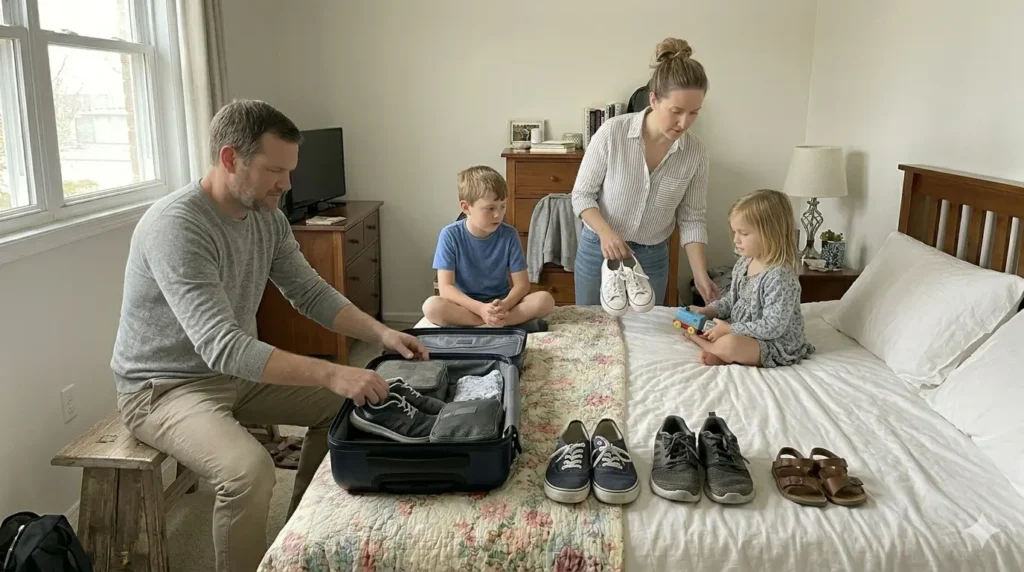
The same logic applies to bulky clothing. Instead of packing heavy items for every possible weather change, layering gives you flexibility without taking up too much space. A light jacket or hoodie can adapt to different conditions much more efficiently.
Use Space-Saving Techniques That Actually Work
How you pack matters just as much as what you pack, especially when space is limited.
Rolling clothes helps keep things compact and makes it easier to see everything at once instead of stacking items on top of each other. This is particularly useful for kids’ clothing, where smaller pieces can quickly become disorganized.
Packing cubes can also be helpful, not because they create more space, but because they create structure. When each category has its place, it becomes easier to stay organized throughout the trip and avoid unnecessary repacking.
If you want to build a more consistent system that stays organized even after a few days, How to Organize a Suitcase Efficiently explains this in more detail.
Pack Smarter for the Flight, Not Just the Destination
Many families focus on the suitcase and forget that the most challenging moments often happen during the journey itself.
When you pack light, your carry-on becomes more important. It should contain the items that solve real problems during travel, not everything you might possibly need. A few well-chosen essentials are usually enough:
- Snacks your kids already enjoy
- A familiar comfort item like a toy or small blanket
- Basic toiletries and wipes
- One change of clothes
These items are not meant to fill time endlessly. They are there to handle delays, transitions, and those moments when kids feel tired or uncomfortable.
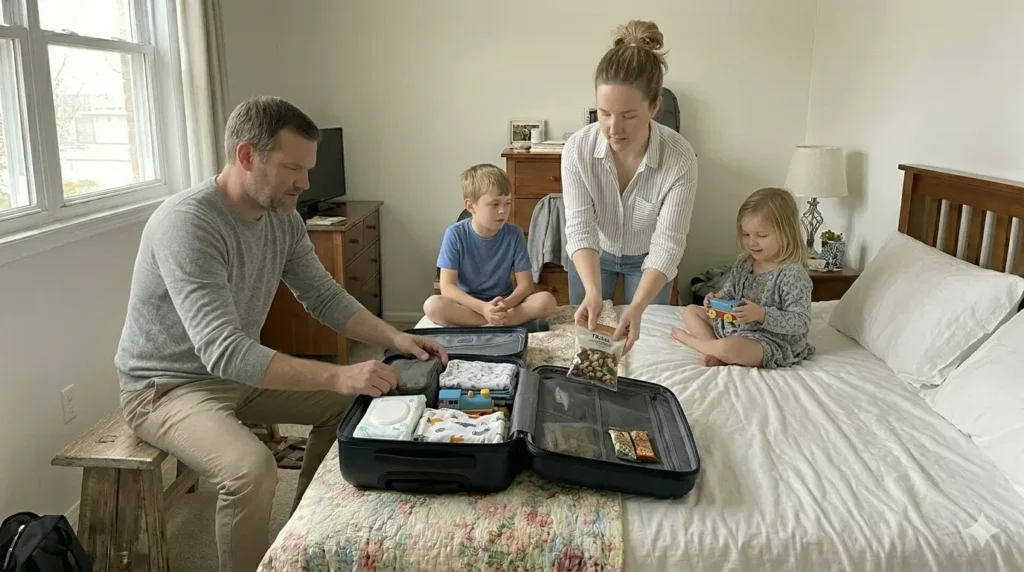
If you want to refine this further, Carry-On Packing for Family can help you decide exactly what deserves space in your carry-on.
Plan for Laundry (The Simplest Way to Pack Less)
One small shift can completely change how much you pack: you don’t need to prepare for the entire trip at once.
If you can do laundry even once during your stay, you can significantly reduce the number of clothes you bring. Many accommodations offer simple options, and even a quick wash can reset your entire packing system.
This approach removes the pressure of planning for every single day in advance. Instead, you rotate what you already have, which makes packing lighter and more manageable.
Families who travel frequently rely on this strategy because it keeps both luggage and routines simple.
What You Should Not Pack
Packing light is not only about choosing what to bring. It’s also about recognizing what you can leave behind.
Extra outfits “just in case,” duplicate toiletries, and backup items for unlikely situations are usually the first things you realize you didn’t need. They take up space without adding real value.
Another common mistake is packing items that are easy to find at your destination. Basic essentials like toiletries or snacks are available in most places, so carrying large quantities of them rarely makes sense.
If you want a clearer breakdown, What Not to Pack for Family Travel goes deeper into what families often bring but rarely use.
Keep It Realistic, Not Minimal
Packing light does not mean packing the absolute minimum. It means packing what you will realistically use.
There is a difference between being prepared and being overloaded. The goal is to create a balance where you feel ready, but still flexible enough to adapt during the trip.
Every experience teaches you something. You might notice that you packed too much of one item or not enough of another. Over time, these small adjustments help you build a system that works naturally for your family.
Packing light with kids isn’t about getting everything right from the beginning. It’s about learning what works and improving with each trip.
You will always forget something, and you will always bring something you didn’t need. That’s part of the process, not a mistake.
What matters is that each trip makes the next one easier. And with time, packing light stops feeling like a challenge and becomes a simple habit that makes travel smoother for everyone.