




Packing a carry-on for a family is very different from packing a regular suitcase. At first, it may seem like a smaller, simpler task, but once you start thinking about what actually happens during the journey, you realize that this bag carries more responsibility than anything else.
It is not just about what you bring, but about what you can reach quickly when things do not go as planned. Delays, tired kids, spills, boredom, and last-minute changes are all part of real travel. A well-prepared carry-on does not eliminate these moments, but it helps you handle them without stress.
This guide will help you rethink your carry-on as a small, practical system that supports your family throughout the entire journey, not just a backup bag.
Think in Moments, Not Categories
Most packing advice tells you to organize items into categories like snacks, toys, or clothes. While that sounds logical, it often leads to overpacking or, worse, missing the exact thing you need at the wrong moment.
A more effective way is to think in terms of real travel situations. Imagine your day step by step: waiting at the gate, boarding the plane, dealing with a delay, or calming a tired child halfway through the journey. These are the moments where your carry-on either works perfectly or completely fails you.
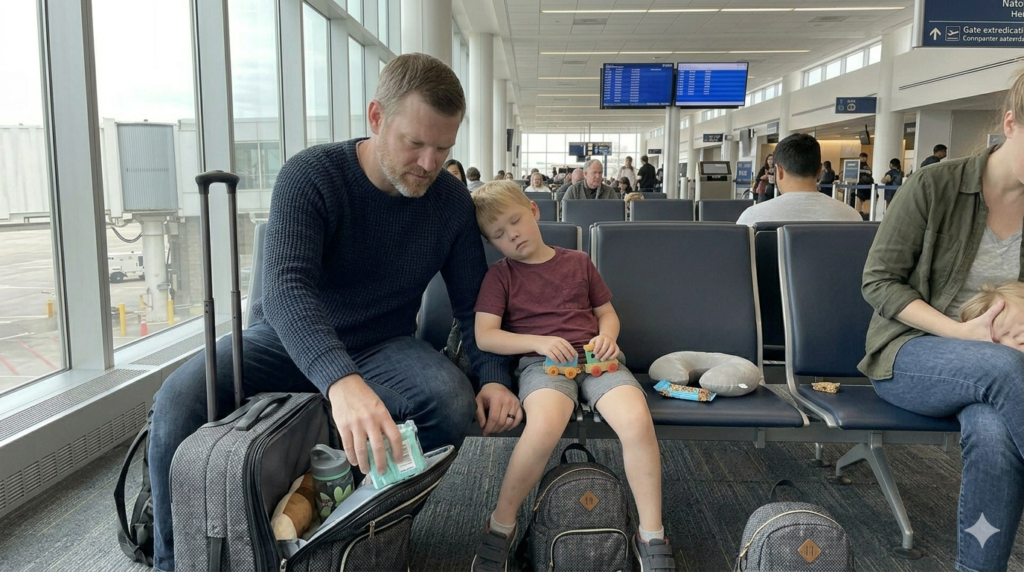
A simple rule many experienced families follow is to pack as if the trip might be delayed by three extra hours. This mindset shifts your decisions. You stop packing “just in case” items and start packing things that solve real problems. Every item begins to have a clear role instead of just filling space.
Build Simple “Zones” Inside Your Bag
One of the most common issues is treating the carry-on like one open space where everything gets mixed together. At the beginning of the trip, it may look organized, but after a few hours, it quickly turns into a mess, especially when you need something urgently.
A better approach is to create simple zones inside your bag. You do not need anything complicated. Just a clear separation between essentials, snacks, documents, and comfort items. What matters is not the system itself, but the fact that you can reach what you need without thinking.
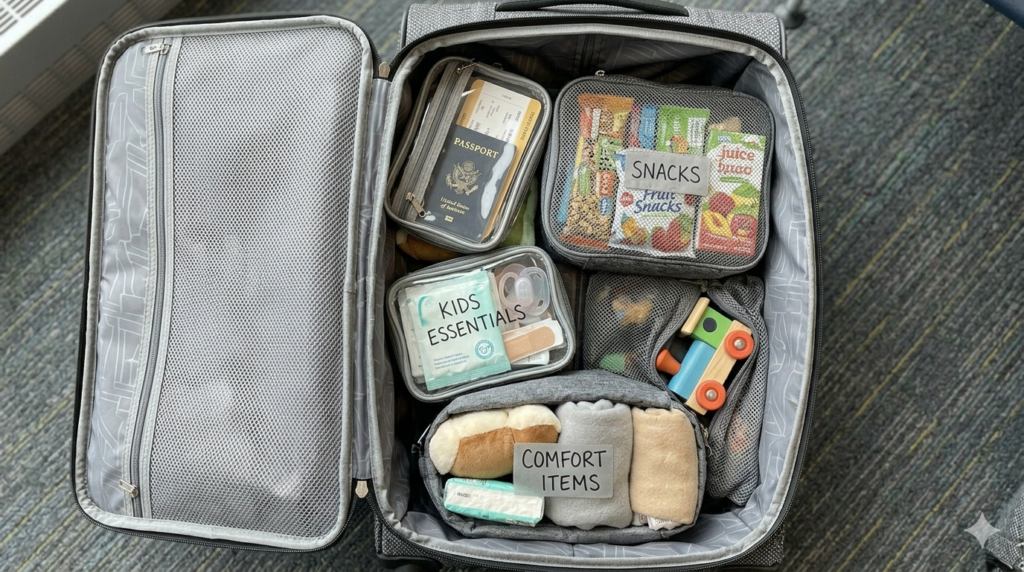
This is where many families fall into what we can call the “Access Trap.” You know you packed something important, but you cannot reach it without unpacking half the bag. When everything has a place, this problem disappears, and small stressful moments become much easier to manage.
What Actually Makes a Difference During the Trip
Instead of building a long list, it is more useful to focus on what truly improves your experience during travel. Some items consistently make a difference, not because they are essential in theory, but because they solve very common problems in real situations.
- Easy-to-eat snacks that are not messy
- Refillable water bottles
- Wipes, tissues, and hand sanitizer
- One extra outfit for each child
- Any essential medication
- Travel documents and IDs
These are the items that help you handle delays, small accidents, and unexpected situations without turning them into stressful moments.
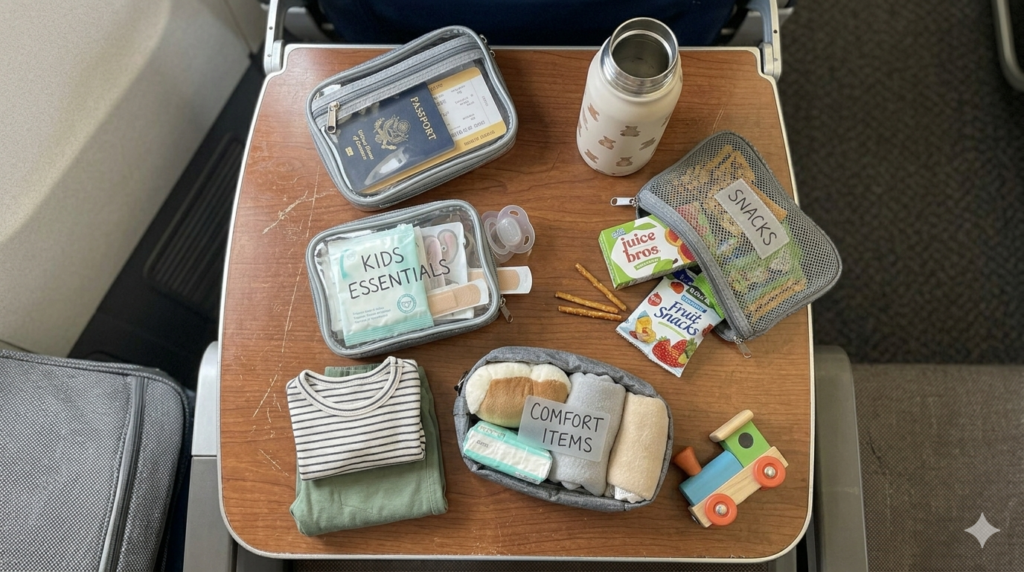
If you prefer having a complete system you can reuse before every trip, you can explore Best Packing List for Family Travel, where everything is organized in a structured and practical way.
Entertainment Without Creating More Stress
Entertainment is important, but it is also one of the easiest ways to overpack. Many parents feel the need to bring multiple toys, games, or new items to keep kids busy, thinking that more options will make things easier.
In reality, too many choices often do the opposite. Kids get overwhelmed, lose interest quickly, or keep switching between things without settling on anything.
Familiar items tend to work much better. A favorite toy, a simple activity they already enjoy, or a tablet with pre-downloaded content usually keeps them engaged longer. Travel is already a new and sometimes overwhelming environment, so comfort and familiarity often matter more than novelty.
Do Not Forget the Parents
It is easy to focus entirely on kids when packing, but parents also need to stay comfortable and prepared. Long travel days can be exhausting, and small things can make a big difference in how you experience the journey.
Keeping a small pouch inside your carry-on is a simple but very effective solution. Instead of searching through the entire bag, you have quick access to what you personally need.
- Phone charger or power bank
- Earphones or earplugs
- Basic medication
- Backup copies of important documents
This small detail gives you more control during the trip and reduces unnecessary stress, especially in busy or tiring moments.
Keep Essentials Easy to Reach
Even the best-packed carry-on can become frustrating if important items are buried at the bottom. Many problems during travel come from accessibility, not from forgetting things.
Items like documents, snacks, or wipes should always be placed in outer pockets or top sections where you can reach them quickly. This becomes especially important during transitions like security checks, boarding, or when you need something urgently for your child.
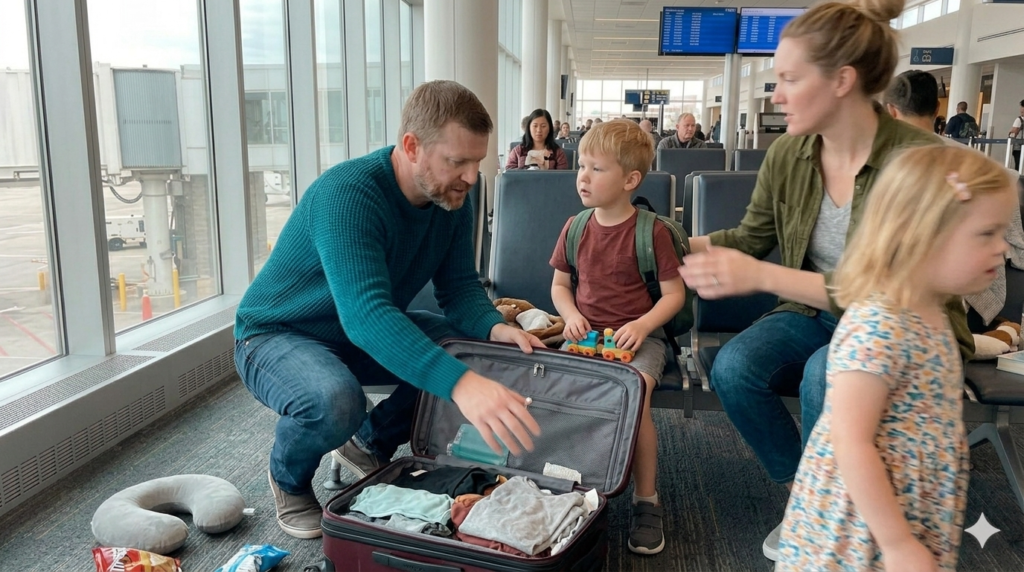
Small adjustments in placement can completely change how smooth your travel experience feels.
Connect Your Carry-On to Your Overall Packing System
Your carry-on works best when it is part of a bigger system. If your main suitcase is disorganized, your carry-on will quickly become overloaded because you try to compensate for that.
When your main luggage is packed properly, your carry-on becomes lighter, more focused, and easier to manage. Each part supports the other instead of creating extra work.
If you want to build a complete and practical system, you can start with How to Pack a Suitcase for a Family Trip (Step-by-Step Guide) and then refine how each part of your packing works together.
A good carry-on is not about being prepared for everything. It is about being ready for the moments that matter most during the journey.
You will always adjust your system over time. Some things you bring will not be used, and sometimes you will wish you packed something else. That is part of learning how your family travels.
What makes the real difference is not perfection, but having a simple, flexible approach that helps you stay calm and organized when it matters most. Over time, your carry-on becomes less of a random bag and more of a reliable part of your travel routine.