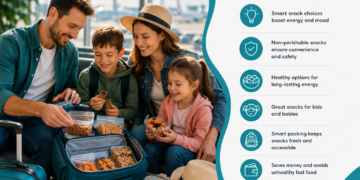





Packing snacks for kids during travel may seem like a small detail at first, but it often becomes one of the most important parts of the entire journey. Hunger rarely comes at the “right” moment. It shows up during long waits, unexpected delays, or just when you are trying to keep things calm and under control.
At the same time, many parents fall into the opposite problem. They pack too many snacks without a clear system, which leads to clutter, crushed food, and frustration when trying to find something quickly. What should feel helpful ends up creating more stress.
The goal is not to pack more snacks. It is to pack them in a way that actually works in real travel situations.
Why Snacks Matter More Than You Think
For children, snacks are not only about eating. They are closely connected to comfort, routine, and emotional balance, especially in unfamiliar environments. A small snack at the right moment can prevent a meltdown, buy you time during a delay, or simply make a long wait feel more manageable.
This is why experienced parents stop thinking of snacks as a backup plan and start seeing them as a simple tool to manage the flow of the trip. When used well, they can smooth transitions and reduce tension without adding complexity.
Think in “Moments,” Not Just Food
Instead of choosing snacks randomly, it helps to imagine how your travel day will actually unfold. Most trips include a few predictable phases, such as waiting before departure, being in transit, and arriving tired at your destination.
Each of these moments creates a different need. During transitions, quick and familiar snacks work best because they require no effort. During longer stretches, you need something that lasts longer and keeps kids satisfied.
This way of thinking naturally reduces overpacking, because you are no longer guessing. You are preparing for real situations, not hypothetical ones.
Build a Balanced Snack Mix
A smart snack setup is not about offering more choices, but about creating a simple balance that works in real travel situations. Instead of filling your bag with many similar options, it helps to think in terms of purpose.
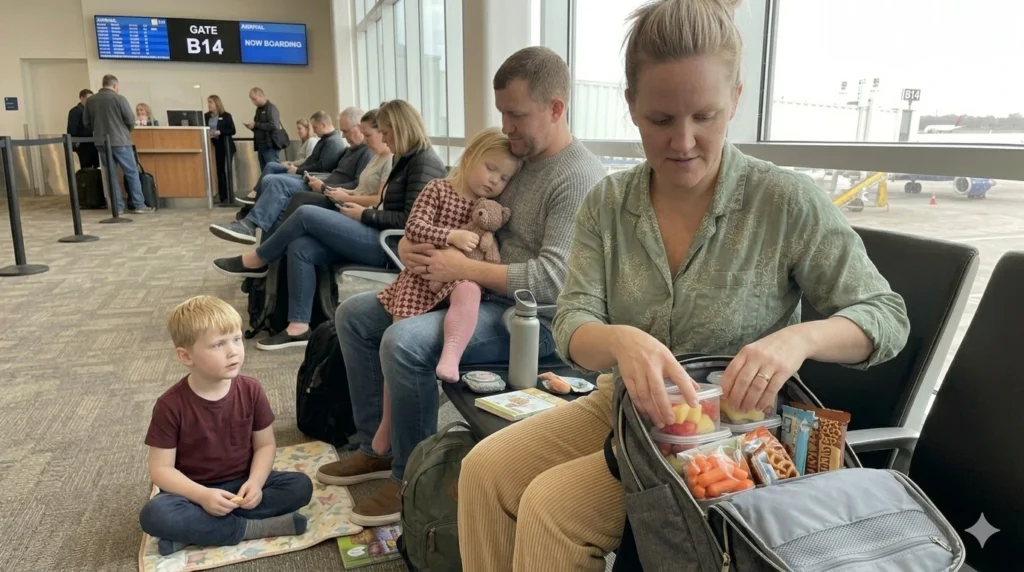
Some snacks should be quick and easy for short moments, especially during transitions when kids need something immediate without effort. Others should be more filling, helping them stay satisfied for longer periods such as flights or extended car rides. You can also include one or two “treat” options, not as a main strategy, but as a small reward that can be useful at the right moment.
At the same time, it’s important to stay mindful of how different types of snacks affect your child’s energy and mood. High-sugar snacks may seem helpful in the moment, but they often lead to quick energy drops, which can make children more irritable or restless shortly after.
A more balanced mix usually creates a smoother experience throughout the journey. Another detail that becomes increasingly important with experience is familiarity.
Travel is not the ideal time to introduce new foods, especially when you rely on snacks to keep things calm and predictable. Choosing snacks your child already knows and enjoys reduces uncertainty and helps you manage situations more easily without unexpected reactions.
Avoid the Mess and Access Problems
Some snacks seem practical at home but quickly become a problem during travel. Anything that melts, crumbles easily, or creates sticky hands can turn into stress, particularly in small spaces like airplane seats or car rides.
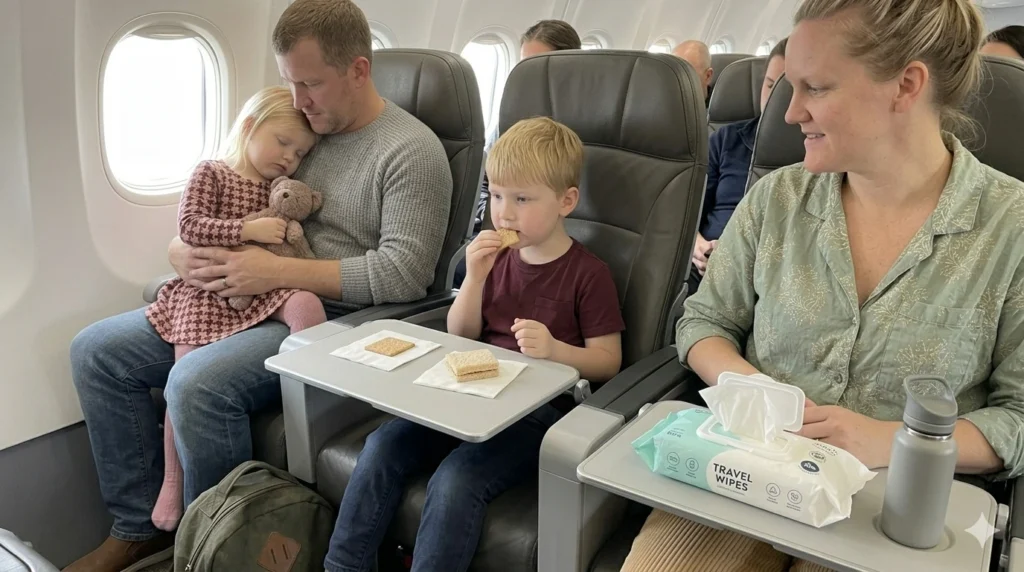
Choosing snacks that are easy to handle and clean up makes a noticeable difference. It is not just about what kids eat, but how easy it is for you to manage the situation afterward.
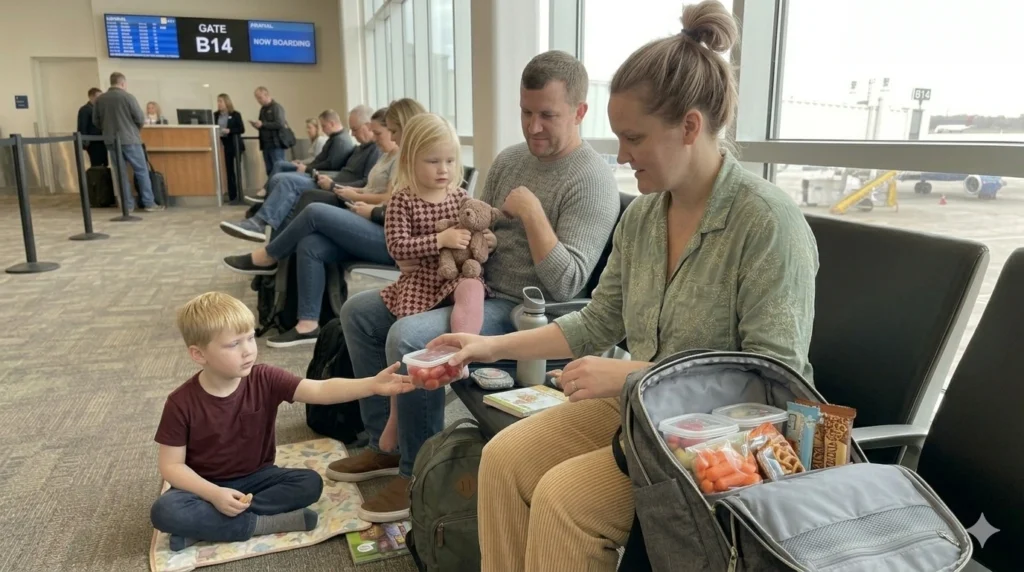
Packaging also plays a role here. When snacks are pre-portioned into small containers or bags, it becomes easier to control portions and avoid unnecessary mess. You spend less time managing food and more time focusing on the trip itself.
Organize Snacks So They Actually Help You
Packing snacks without organizing them is one of the most common mistakes. Everything ends up in one place, and every time your child asks for something, you have to search through the entire bag.
A simple system works much better. Keep frequently used snacks within reach, group similar items together, and separate what you will use during the journey from what you are saving for later.
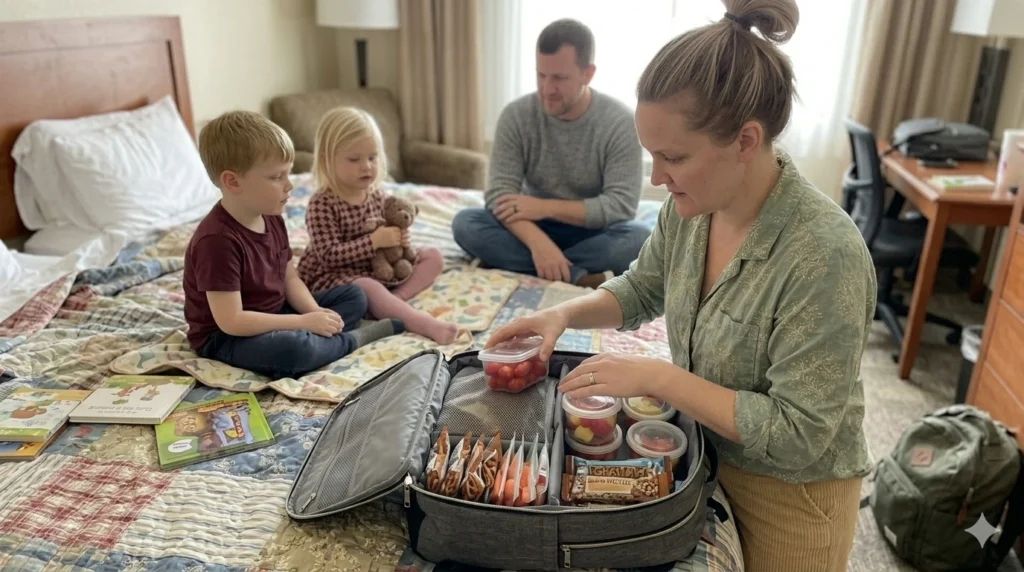
For families with more than one child, creating small snack packs for each child can make a surprisingly big difference. When a child has their own snack kit, they feel a sense of control over their supplies, which often reduces constant questions and interruptions. It is a small psychological shift, but it can make the journey feel calmer for everyone.
If you want to build a full system around this, you can explore How to Organize a Suitcase Efficiently or connect it with How to Pack a Suitcase for a Family Trip (Step-by-Step Guide) to see how everything fits together.
How Much Should You Pack Without Overdoing It?
This is one of the most common questions, and the answer is usually simpler than expected.
Instead of thinking in quantities, it helps to think in moments. How many times will your child likely ask for a snack during the trip? Once you have a rough idea, you can add a small buffer to account for delays or unexpected situations.
This approach feels more natural and avoids the common trap of packing “just in case” items that never get used. You are not trying to cover every possibility, only the most realistic ones.
Small Extras That Make Everything Easier
Some of the most useful additions are not snacks themselves, but the small items that make them easier to manage. Reusable containers, wet wipes, and a couple of empty zip bags can completely change how you handle spills, leftovers, or sudden messes.
These are the kind of details that seem minor until you actually need them. Once you do, they become part of your standard travel routine.
You may notice that this approach is similar to what we discussed in How to Pack Baby Essentials for Travel. The idea stays consistent across all family travel: small preparation prevents bigger problems later.
Adjust Based on the Type of Trip
Not all travel situations require the same approach. For flights, compact and mess-free snacks that are easy to access are the best choice, since space is limited and movement is restricted.
Road trips give you more flexibility, which allows for a bit more variety and larger options if needed. Short trips require less planning, while longer journeys benefit from a more structured system.
Adapting your snack strategy to the type of trip keeps things efficient without making packing more complicated.
Packing snacks for kids is not about creating the perfect selection. It is about understanding how those snacks will be used throughout the journey and preparing in a way that supports real moments.
Over time, you will notice patterns. What your child actually eats, what works during delays, and what you can skip entirely. Each trip makes the next one easier, and your snack system becomes more refined without needing to be more complex.
And in many cases, it is these small details that make the biggest difference in how smooth and enjoyable your travel experience feels.