





Packing a suitcase is one thing. Keeping it organized during a real family trip is something completely different.
At home, everything looks neat and under control. Clothes are folded, items are easy to find, and the suitcase feels perfectly arranged. But once the trip begins, that order rarely lasts. After the first day, things start to shift. After the second, it often turns into a mess.
This is where most families struggle, not because they packed the wrong things, but because they didn’t build a system that works during the trip itself.
Organizing a suitcase efficiently is not about making it look good before you leave. It is about making it easy to use when you are tired, in a hurry, or dealing with kids who need something right now.
Why Most Suitcases Become Messy After Day One
The problem is not packing. It is how the suitcase is used after it is opened.
Most people organize their suitcase based on how it looks, not how it functions. Items are stacked, folded, and arranged to fit nicely, but without thinking about how often they will be used or how easy they are to access later.
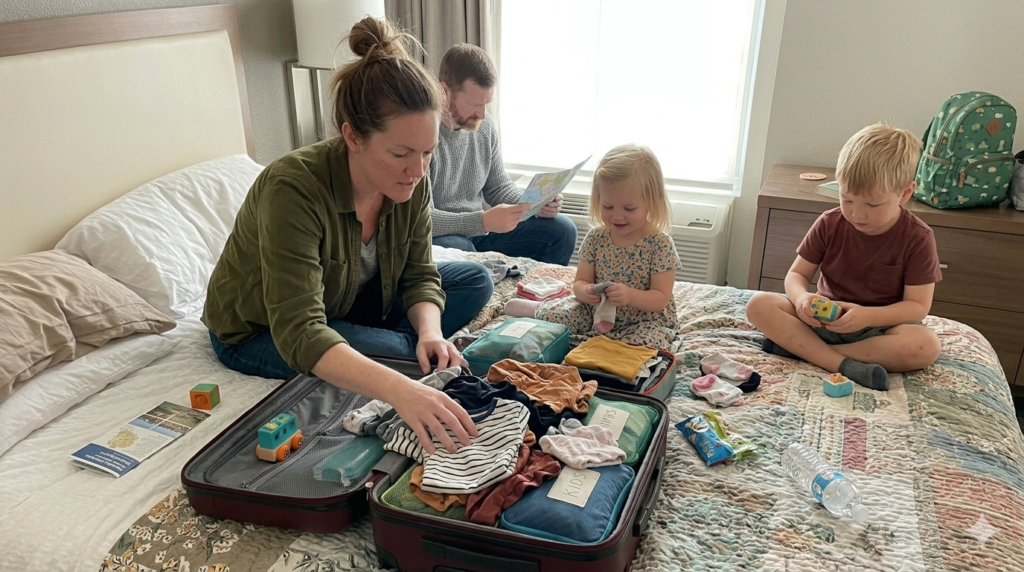
During a trip, you are not slowly unpacking. You are quickly grabbing things, putting them back in a rush, and moving on. When everything is layered on top of each other, even a well-packed suitcase turns into chaos very quickly. That is why the goal is not visual organization. It is functional organization.
Organize by Function, Not by Person
One of the most effective changes you can make is to stop thinking in terms of “this belongs to this person” and start thinking in terms of use.
Instead of separating each family member’s clothes into different sections, group items by type or purpose. Daily clothes in one place, sleepwear in another, activity-specific items somewhere else. This way, when you need something, you are not searching through multiple sections.
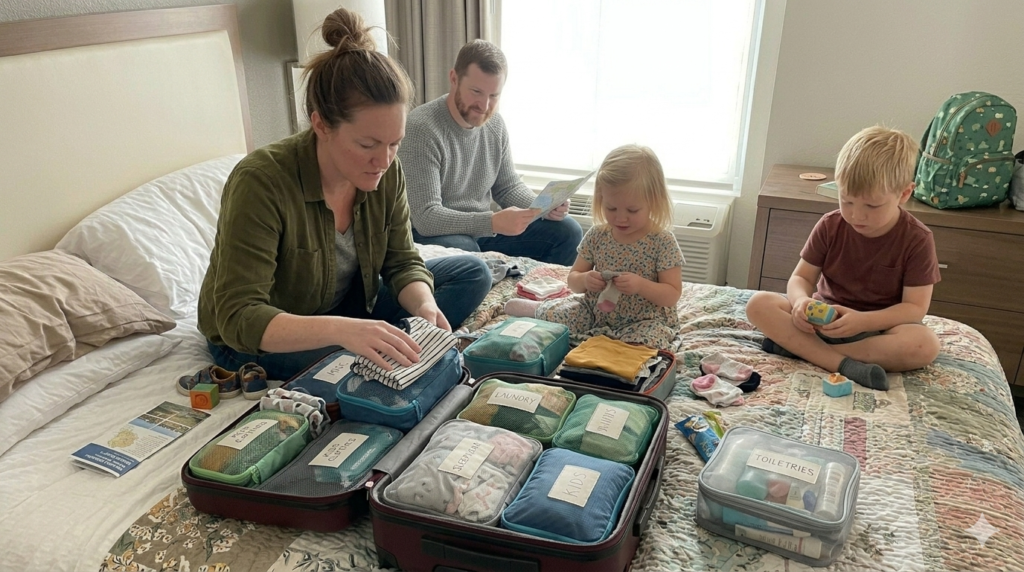
This approach becomes especially useful during busy moments. You do not need to think. You just reach for the category you need.
Over time, this simple shift reduces friction in a way that most families immediately notice.
Create Clear Zones Inside Your Suitcase
Once you start organizing by function, the next step is to create simple “zones” inside your suitcase.
You do not need anything complicated. Even basic packing cubes or small bags can help you divide your suitcase into clear sections. What matters is consistency, not perfection. For example, you might have:
- One area for daily clothing
- One for sleepwear
- One for kids’ items
- One for toiletries
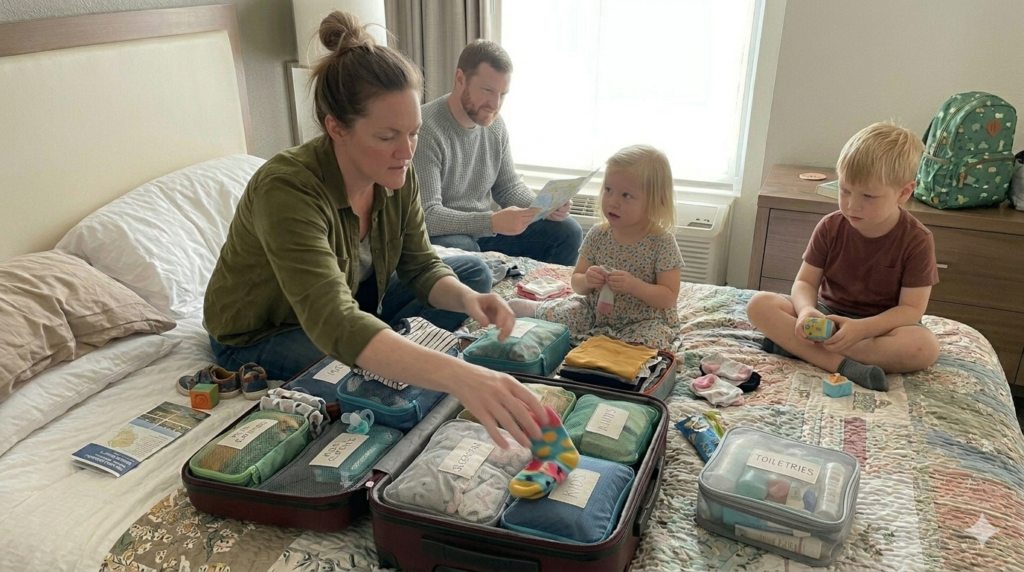
If you want to make this even easier, you can use visual cues like colors. A simple system, such as using one color per category, makes it much faster to find things without thinking, especially when you are in a rush. This is not about aesthetics. It is about speed and clarity.
Make Accessibility Your Priority
A common mistake is focusing too much on saving space and not enough on accessibility.
Some items are used once a day. Others are used multiple times. Treating them the same way creates problems later.
Things you need often should always be easy to reach. Items you rarely use can stay deeper in the suitcase. This small decision changes how your suitcase works throughout the entire trip.
When everything is equally buried, every small action becomes slower. And when you are traveling with kids, even small delays can feel overwhelming.
The 2-Minute Reset That Keeps Everything Organized
Even with a good system, things will get messy. That is normal. What makes the difference is having a simple way to restore order quickly. This is where a small habit can completely change your experience.
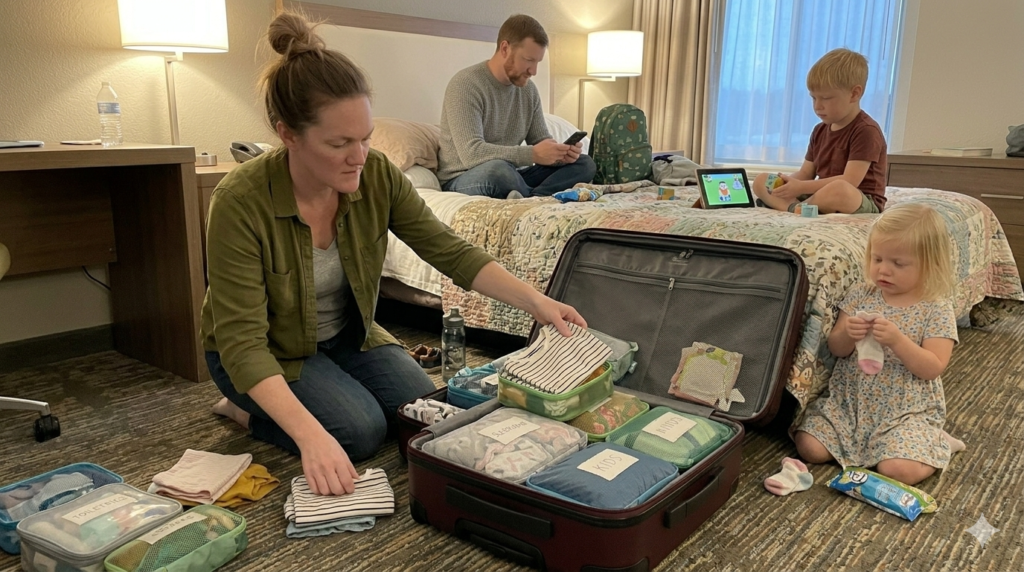
At the end of each day, take two minutes to reset your suitcase. Put items back into their zones, refold what needs to be folded, and remove anything that does not belong there.
It does not need to be perfect. It just needs to bring your suitcase back to a usable state. This habit prevents small messes from turning into big frustration later.
Keep Toiletries and Small Items Under Control
Toiletries are one of the fastest ways to lose organization. They move around, leak, or take up more space than expected.
Instead of placing them loosely inside your suitcase, keep them contained in a dedicated pouch. This makes them easier to access and prevents them from mixing with clothing.
The same idea applies to small items like chargers, medications, or accessories. When these are grouped together in a simple system, you avoid the common problem of searching for small things at the worst possible moment.
If you want a deeper system for this, you can explore Packing Toiletries for Kids Travel or learn more in How to Pack a Suitcase for a Family Trip (Step-by-Step Guide).
Avoid Overcomplicating Your System
Some families try to create very detailed systems with too many categories. While this sounds efficient, it often becomes difficult to maintain during the trip.
A good system is not the most detailed one. It is the one you can realistically follow when you are tired or in a hurry. If organizing your suitcase feels like work, it will not last. Keeping it simple is what makes it sustainable.
An organized suitcase is not something you create once. It is something you maintain throughout your trip.
The goal is not perfection. It is reducing the time you spend searching, fixing, and reorganizing. When everything has a place and is easy to access, even busy travel days feel smoother.
And like everything in family travel, you will refine your system with each trip. Small adjustments make a big difference over time, and what feels difficult at first quickly becomes second nature.