




Long flights with kids are not just about getting from one place to another. They are a full experience on their own, with changing moods, limited space, and long hours that feel very different from a normal day.
Many parents prepare well for the destination but underestimate the flight itself. The result is usually the same: boredom, discomfort, and moments that feel harder than they should.
The difference rarely comes from packing more. It comes from packing with a clear understanding of what actually happens during a long flight and preparing for those moments in a practical way.
Understand How Long Flights Actually Feel for Kids
A long flight is not one continuous experience. It is a series of phases that children react to differently.
At the beginning, there is excitement and curiosity. Then comes the settling period, where kids start to feel the limits of the space around them. After a few hours, boredom appears, followed by tiredness, and sometimes frustration if they cannot sleep comfortably.
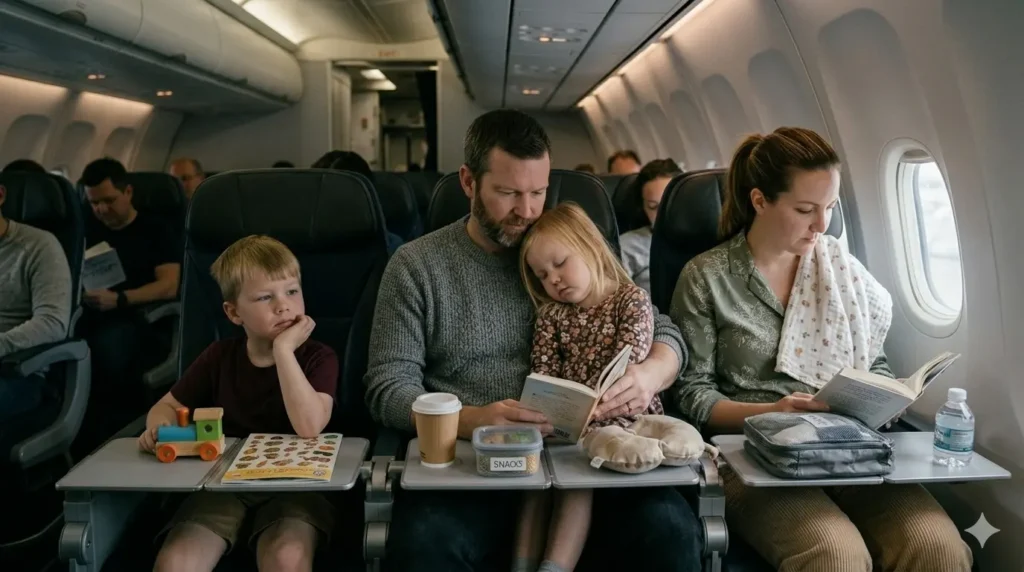
When you think about the journey this way, packing becomes more intentional. You are not just filling a bag, you are preparing for transitions between energy, boredom, hunger, and rest.
This shift alone helps you make better decisions without adding unnecessary items.
Pack Your Carry-On Like a “Survival Kit”
Your carry-on is the most important part of your packing for a long flight. It is not just a bag, it is what you rely on for several hours in a controlled environment where access to your main luggage is limited.
Instead of organizing it by categories, it helps to think in terms of access. The items you will need most often should be easy to reach without unpacking everything.
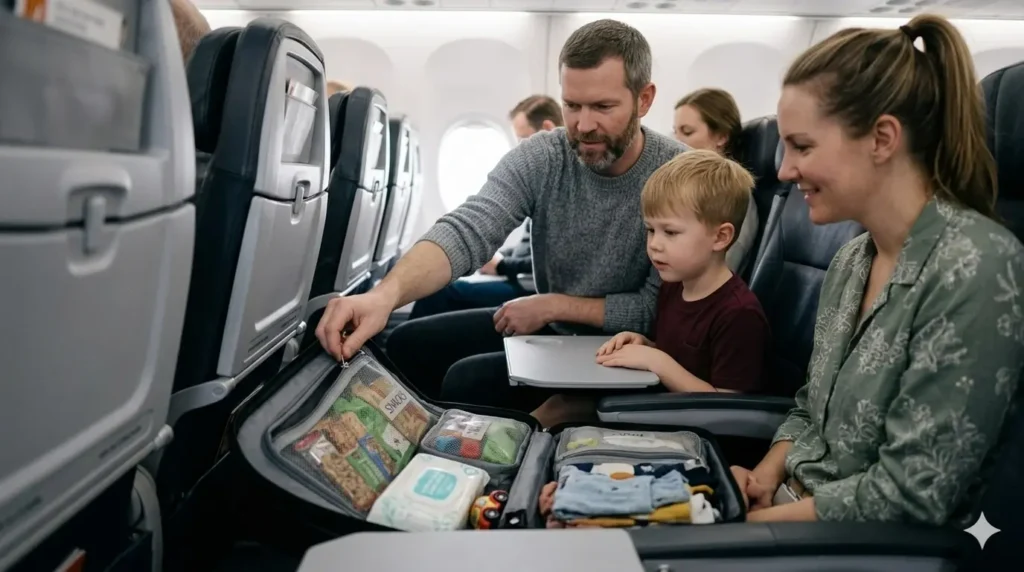
Snacks, wipes, a change of clothes, and small comfort items should always be within quick reach. Less frequently used items can stay deeper in the bag.
If you want to build this system properly, you can refer to Carry-On Packing for Family Travel, where we break down how to structure everything step by step.
Plan Entertainment That Actually Lasts
Entertainment during long flights is often where packing becomes inefficient, either by bringing too much or relying too heavily on a single solution.
Many parents depend entirely on screens, assuming they will solve boredom for the entire journey. While tablets and phones can be helpful, they rarely remain effective for hours without interruption.Batteries run out, attention shifts, and children often need a change in stimulation after some time.
A more practical approach is to create a balanced mix of entertainment that works in stages. Familiarity plays a key role here. Children tend to engage longer with items they already know and enjoy, rather than new toys or activities introduced during the flight. Simple activities, small games, drawing materials, or pre-downloaded content can all play a role when used thoughtfully.
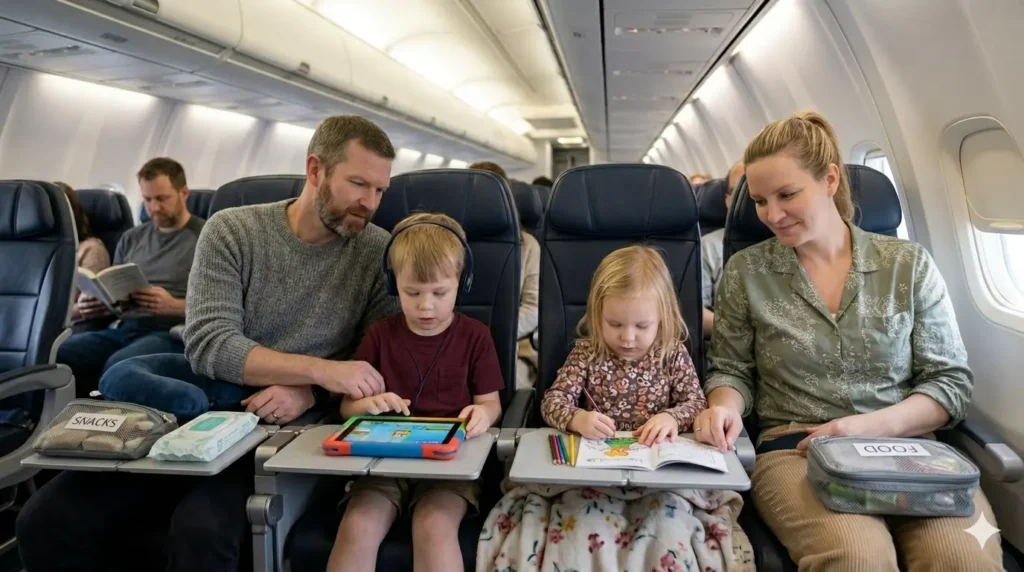
Timing is just as important as the items themselves. Instead of giving everything at once, spacing activities throughout the flight helps extend engagement and prevents early boredom. Think of entertainment as a tool you use gradually to manage time, rather than a one-time solution.
This approach not only reduces how much you need to pack, but also makes the overall experience feel more controlled and less exhausting for both you and your children.
Snacks Are Part of the Strategy, Not an Extra
Snacks become even more important during long flights because they help manage both hunger and mood.
Airline meals do not always match children’s preferences or timing, which is why having your own selection makes things easier. The key is not just what you pack, but how you use it.
Offering snacks at the right moments can help break long periods of waiting and keep energy levels stable. It also gives kids something to look forward to, which makes time pass more smoothly.
If you want a full system for this, you can explore How to Pack Snacks for Kids Travel, where we explain how to choose and organize snacks in a practical way.
Dress for Comfort, Not Just the Destination
Clothing choices can have a bigger impact than most parents expect, especially during long flights where kids sit for extended periods.
Comfort should always come first. Soft layers work better than single bulky outfits because cabin temperatures can change throughout the journey. What feels comfortable at boarding may feel too warm or too cold later.
Having one extra outfit in your carry-on is also important. Spills, accidents, or unexpected discomfort can happen, and being able to quickly change makes the situation much easier to handle.
Make Sleep Easier, Even If It Is Not Perfect
Sleep during a flight is rarely perfect, especially for children who are outside their usual routine.
However, small adjustments can make it easier.
Familiar items like a favorite blanket or small pillow can help signal that it is time to rest. Even something simple from home can create a sense of comfort in an unfamiliar environment.
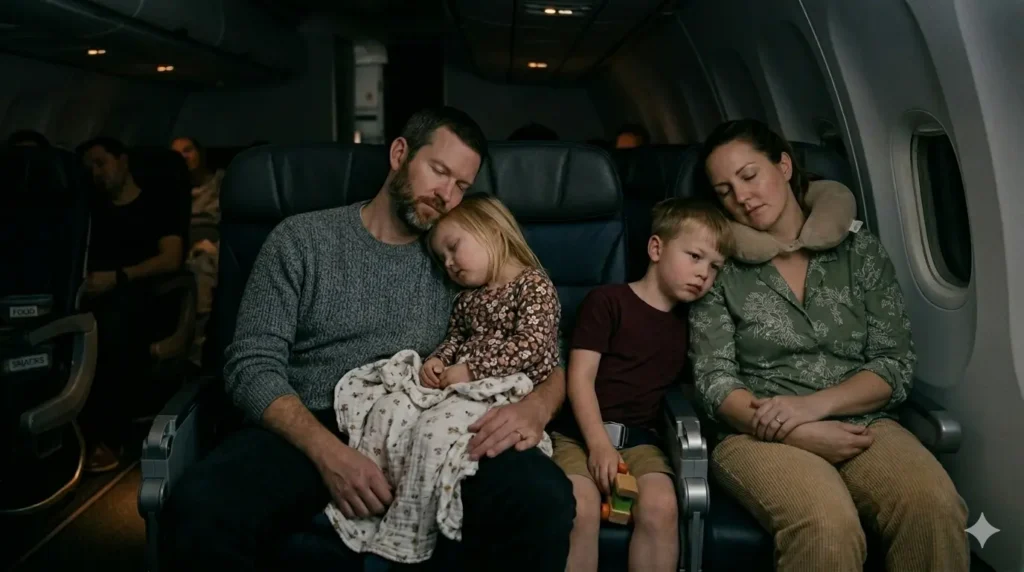
It also helps to accept that sleep may not follow the usual schedule. Instead of trying to control it completely, focus on creating the best possible conditions and letting your child rest when they can.
Be Ready for Small Problems Before They Grow
Long flights tend to amplify small issues. A minor discomfort can quickly turn into frustration if it is not handled early.
This is why preparation for “what might go wrong” is just as important as planning for everything to go smoothly. Wet wipes, basic medication, and a few extra essentials can help you respond quickly without stress.
You do not need to prepare for every possible scenario. You only need enough to handle the most common ones calmly.
This mindset is very similar to what we covered in How to Pack Baby Essentials for Travel, where small details often make the biggest difference.
Keep Your System Simple During the Flight
Even the best packing system can fail if it is too complicated to use in a tight space.
During the flight, simplicity matters more than perfection. Keep items grouped in a way that makes sense to you, and avoid reorganizing everything mid-journey.
A simple structure that allows quick access is far more valuable than a perfectly packed bag that requires time to navigate.
If you want to improve this further, you can explore How to Organize a Suitcase Efficiently, which focuses on keeping things functional beyond the first day of travel.
Long flights with kids are rarely easy, but they can become much more manageable with the right preparation.
You are not trying to control every moment. You are simply creating a system that helps you respond calmly as the journey unfolds. Small choices, like what you pack and how you organize it, often have a bigger impact than you expect.
With each trip, you will learn what works for your family, what can be simplified, and what truly makes a difference. Over time, the experience becomes less stressful and more predictable.
And once the flight feels under control, the rest of the journey becomes much easier to enjoy.