





Traveling to multiple destinations sounds exciting, but packing for it is where things usually start to feel complicated.
Instead of preparing for one place, you are now dealing with different climates, activities, and daily routines. Many families respond to this by packing for every destination separately, which quickly leads to heavy luggage, confusion, and a feeling that you still might be missing something.
The challenge is not the number of destinations. It is the way you think about packing. The goal is to pack once, but in a way that works everywhere you are going.
Why Multi-Destination Packing Feels So Difficult
The main reason this type of packing feels overwhelming is that it creates uncertainty. You start asking questions like: what if the weather changes, what if we need different outfits, what if we cannot find what we need later.
This usually leads to packing “just in case” items for each destination, which multiplies quickly without you noticing.
Another hidden problem is that many families plan their packing around locations instead of days. They think, “this is for the beach, this is for the city, this is for the mountains,” instead of focusing on how those days will actually look.
Once you shift your thinking from destinations to real daily use, everything becomes easier to manage.
Start with Your Itinerary, Not Your Suitcase
Before packing anything, it helps to clearly understand your trip structure. How many days will you spend in each destination, and what kind of activities will you actually do?
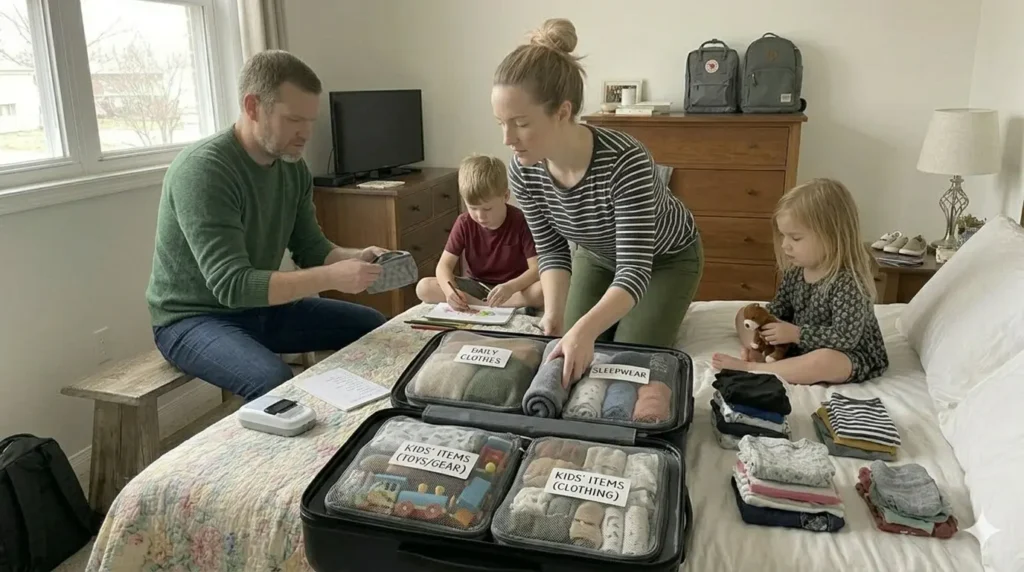
This step is often skipped, but it makes a huge difference. When you know what a typical day looks like in each place, you stop guessing and start making practical decisions.
Instead of packing for every possibility, you are packing for the most likely scenarios. This alone reduces unnecessary items without compromising comfort.
Build a “Core Wardrobe” That Works Everywhere
One of the most effective ways to simplify packing for multiple destinations is to move away from the idea of packing separate outfits for each place and instead focus on building a flexible core wardrobe. This means choosing a smaller number of clothing items that can be combined and reused across different situations, rather than assigning specific outfits to specific locations.
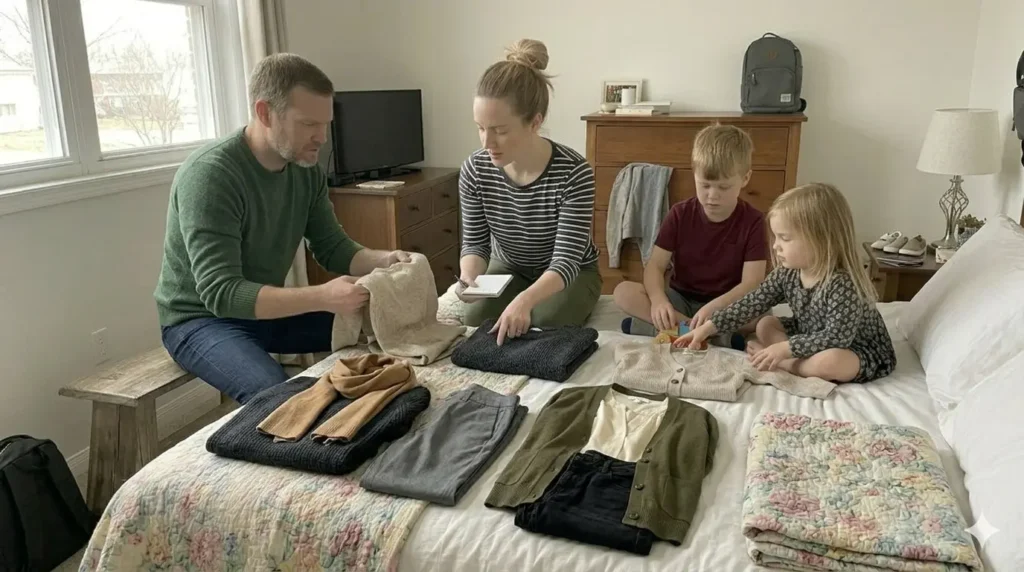
Neutral colors and simple, comfortable pieces tend to work best because they allow easy mixing without overthinking. Instead of needing a completely different set of clothes for each destination, you create combinations that adapt naturally. Layering also becomes essential, especially when traveling between different climates.
A light base layer, combined with one or two adaptable outer pieces, can cover a wide range of temperatures without adding bulk to your luggage.
Another important shift is accepting that you don’t need to pack for every single day of your trip. Planning for one simple laundry moment allows you to reuse items and significantly reduce the number of clothes you carry.
This doesn’t limit your options, it actually gives you more flexibility while keeping your suitcase lighter and easier to manage. Over time, this approach turns packing into a system that works across your entire itinerary, rather than a collection of separate decisions for each destination.
Prepare for Climate Changes Without Overpacking
Traveling between different climates is one of the biggest challenges in multi-destination packing.
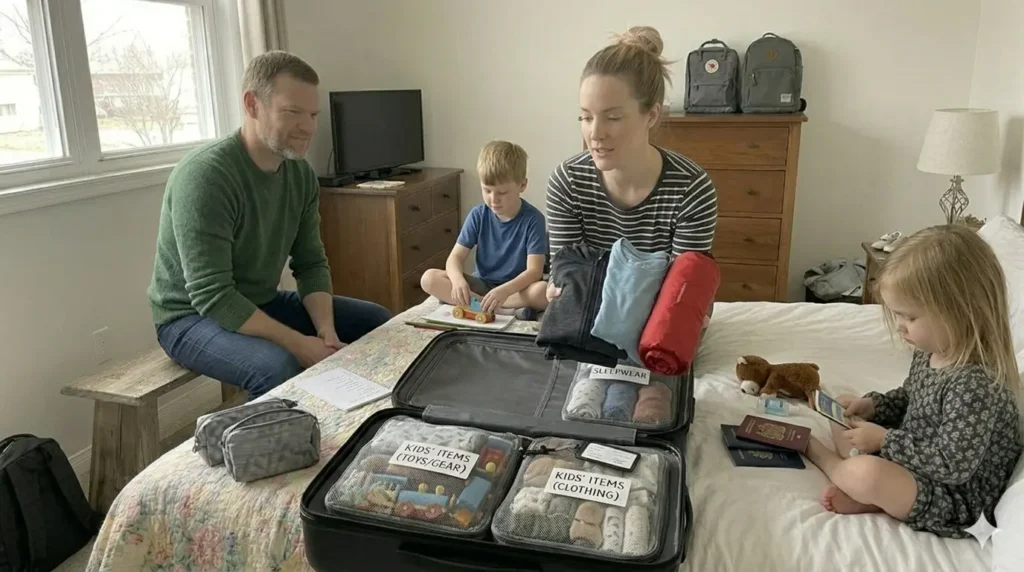
The instinct is usually to pack heavy items for each condition, but this quickly takes up space and makes your luggage harder to manage.
A more efficient approach is to rely on layering instead of bulk. Lightweight items that can be combined give you flexibility without adding weight.
For example, instead of packing multiple thick outfits, a combination of lighter layers can adapt to both warm and cooler conditions. This keeps your suitcase more manageable while still covering your needs.
Plan for Transitions, Not Just Destinations
One detail many families overlook is the time spent moving between destinations. These transition days can be the most tiring, especially with kids.
Packing in a way that supports these moments makes a big difference. Keep essential items easily accessible, including snacks, a change of clothes, and anything your kids may need during long travel periods.
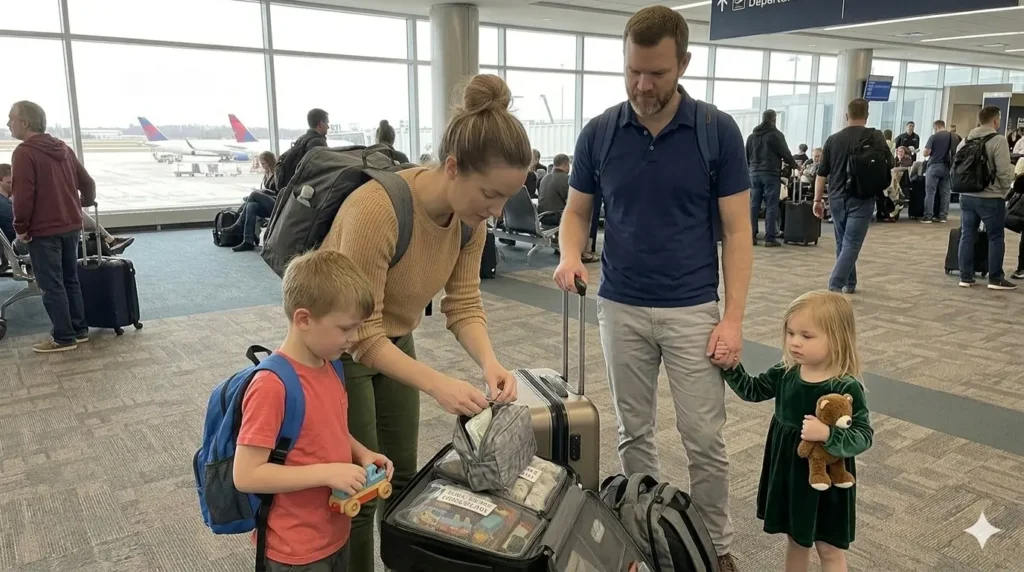
Thinking about these in-between moments helps you avoid digging through your suitcase every time you stop or move.
You can build this system more clearly by combining it with Carry-On Packing for Family Travel and Packing Tips for Long Flights with Kids.
Keep Your Packing System Consistent
When you are moving between multiple locations, your packing system needs to stay simple and consistent.
Reorganizing your suitcase at every destination may seem like a good idea, but it usually creates more confusion. Instead, try to maintain the same structure throughout the trip.
Knowing where things belong reduces stress and saves time, especially when you are tired or in a hurry.
A simple system that you understand well is always better than a complex one that looks perfect but is hard to maintain.
Avoid the Most Common Multi-Destination Mistakes
Many of the problems families face come from a few repeated patterns.
Packing separate outfits for each destination often leads to unnecessary duplication. Ignoring how often you can rewear clothes or do laundry increases the number of items without real need.
Another common issue is underestimating how tiring constant movement can be. Heavy luggage becomes much more noticeable when you are changing locations frequently.
Keeping your packing focused on flexibility and simplicity helps you avoid these problems naturally. If you want to see a full breakdown of these patterns, you can explore Family Travel Packing Mistakes.
Packing for multiple destinations is not about preparing for every place separately. It is about building a flexible system that works across your entire trip.
Once you focus on real daily needs, adaptable clothing, and a simple organization system, the process becomes much easier than it first appears.
You will not get it perfect every time, and that is completely normal. Each trip helps you understand what your family actually uses and what you can leave behind next time.
And over time, even the most complex itineraries start to feel simple and manageable.