





There is a specific kind of discomfort every traveler knows but rarely talks about: the sudden drop of energy and irritability that comes from hunger in the middle of a journey. Whether you are stuck in an airport, on a long road trip, or moving between destinations, hunger does not wait and when it hits at the wrong time, it can quickly turn a smooth trip into a stressful experience.
This is where snacks travel choices become more than just food decisions; they become part of your travel strategy. The right snacks are not only about satisfying hunger, but about maintaining energy, stability, and comfort throughout your journey without relying on expensive or unhealthy fast food options.
Smart travelers understand that food planning is as important as packing clothes or booking flights. When you choose the right non-perishable snacks, you are not just carrying food you are carrying convenience, energy, and control over your travel experience.
Why Choosing the Right Travel Snacks Matters
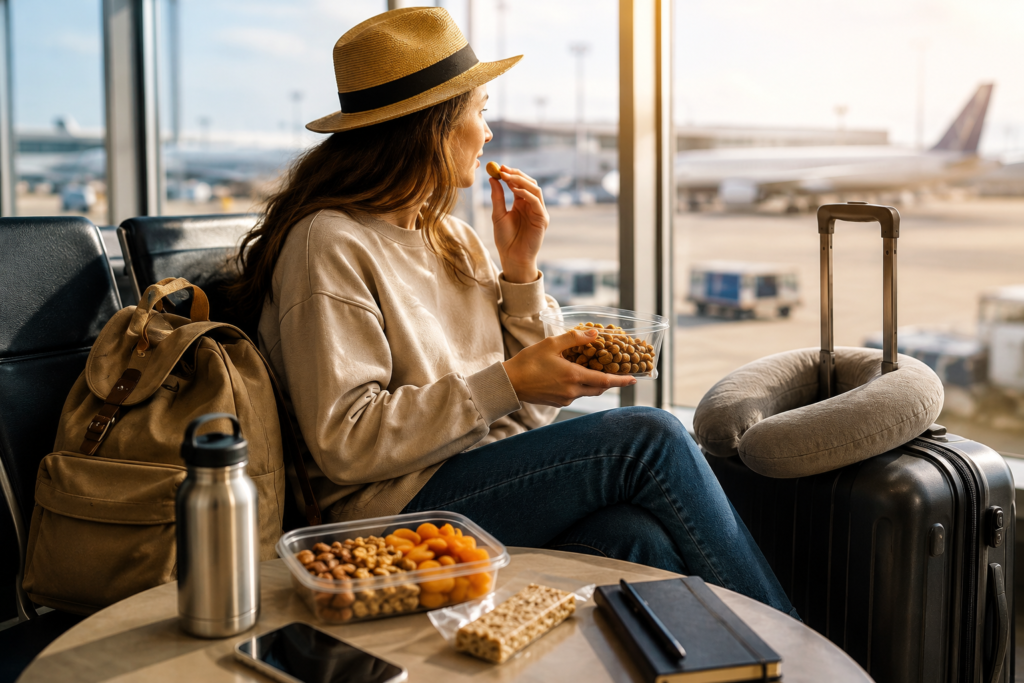
Food has a direct impact on how you feel during travel. When meals are skipped or replaced with low-quality fast food, energy levels drop, focus weakens, and fatigue increases. This becomes even more noticeable during long trips where access to proper meals is limited or unpredictable.
Planning your snacks in advance removes this uncertainty. Instead of reacting to hunger, you stay ahead of it. This helps stabilize your energy levels, reduces stress, and avoids unnecessary stops or expensive food purchases along the way. For families, especially those traveling with children, this planning becomes even more important as it helps maintain a calm and predictable travel rhythm.
What Makes a Snack Travel-Friendly?
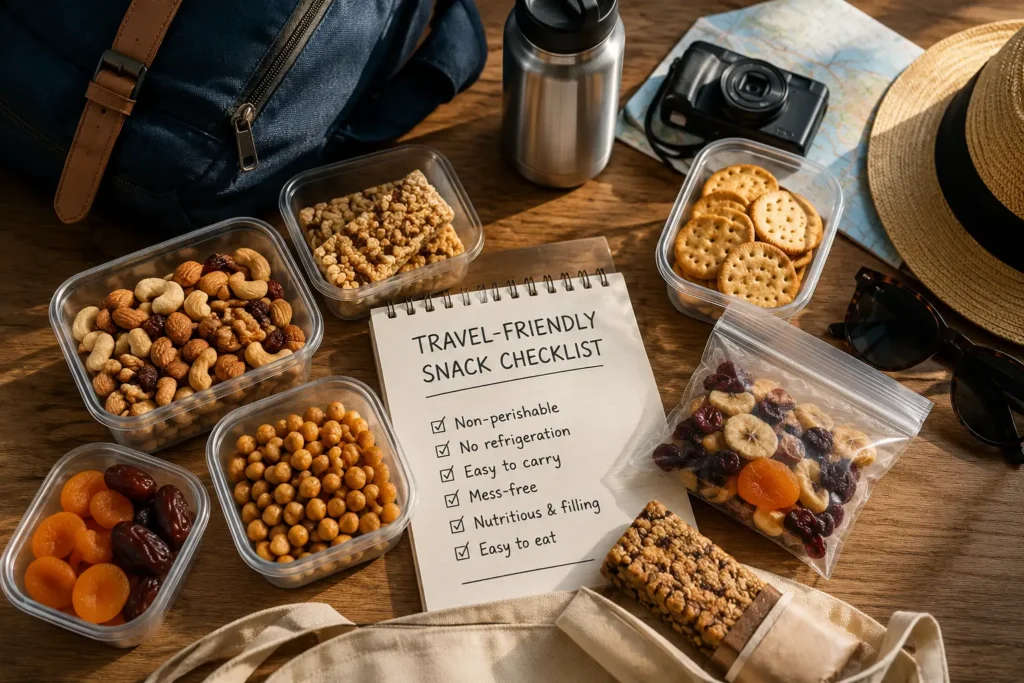
A good travel snack is not defined only by taste, but by functionality. The ideal option is something that remains stable under different temperatures, does not require refrigeration, and can be consumed easily without preparation.
Another important factor is convenience. Travel-friendly snacks should be easy to carry, portioned in a practical way, and not create mess or waste inside your bag. At the same time, they should provide a balance between energy and satiety, ensuring that you feel full enough to continue your journey comfortably without overeating.
Best Non-Perishable Snacks for Travel
Choosing the right foods can completely change your travel experience, especially when they are designed to last long without spoilage or refrigeration.
Healthy Dry Snacks
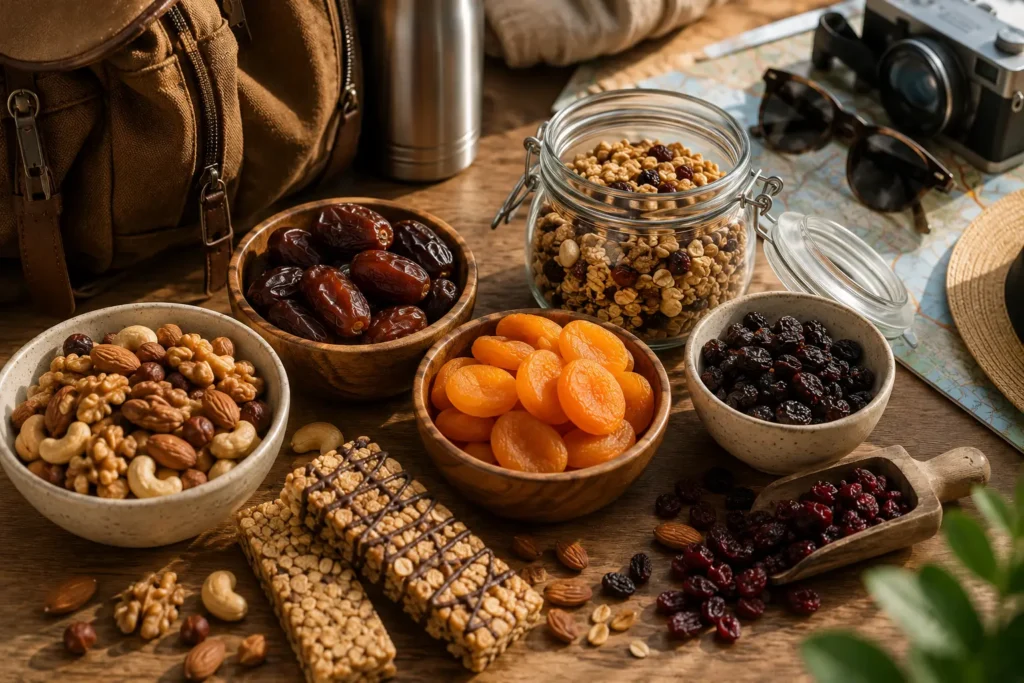
Dry snacks are among the most reliable options for travelers because they are stable, lightweight, and easy to store. Nuts such as almonds, walnuts, and cashews provide long-lasting energy and healthy fats that help maintain fullness for extended periods. Dried fruits like dates, raisins, and apricots offer natural sweetness along with quick energy release, making them ideal for moments of fatigue.
Granola is another highly practical option, combining carbohydrates, fiber, and taste in a compact form that can be eaten anywhere without preparation.
Protein-Rich Snacks
Protein plays a key role in maintaining energy stability during travel. Unlike sugary snacks that cause energy spikes and crashes, protein-based foods provide longer-lasting satisfaction.
Protein bars are one of the most convenient solutions, especially when traveling through airports or long transport routes. They are compact, mess-free, and designed for on-the-go consumption. Small portions of peanut butter are also highly effective, particularly when paired with bread, crackers, or fruit, offering both energy and satiety in a simple form.
Snacks for Kids
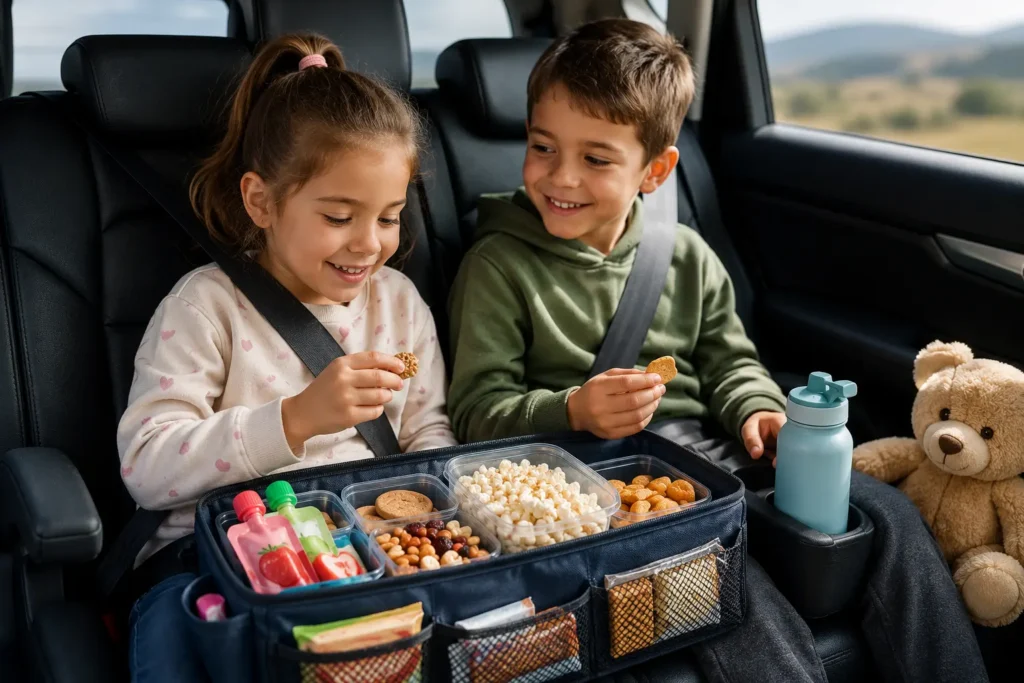
When traveling with children, snack selection becomes even more strategic. Kids are more sensitive to hunger and boredom, so having the right food can directly influence their mood and behavior during the trip.
Simple, familiar snacks such as healthy biscuits, popcorn, or lightly sweetened dry foods are ideal because they are easy to eat and do not create mess. These options also help keep children engaged and calm, reducing travel-related stress for parents.
Travel Snacks for Long Trips
On long journeys, food timing becomes just as important as food choice. Extended travel often leads to irregular eating patterns, which can cause fatigue, irritability, and loss of focus.
To avoid this, it is important to combine different types of nutrients especially carbohydrates and proteins to maintain steady energy levels. Eating small portions at regular intervals is more effective than consuming large meals infrequently, as it keeps the body consistently fueled without feeling heavy or sluggish.
Snacks for Traveling with Kids and Babies
Traveling with young children or babies requires a more thoughtful approach to food planning. The goal is not only nutrition, but also simplicity, safety, and convenience.
For children, it is best to bring snacks they already enjoy and recognize, as this provides comfort in unfamiliar environments. For babies, soft and ready-to-eat options are usually more practical. However, it is important not to overpack food supplies, as many items can often be purchased at the destination if needed. This reduces unnecessary luggage weight while maintaining flexibility.
Smart Packing Tips for Travel Snacks
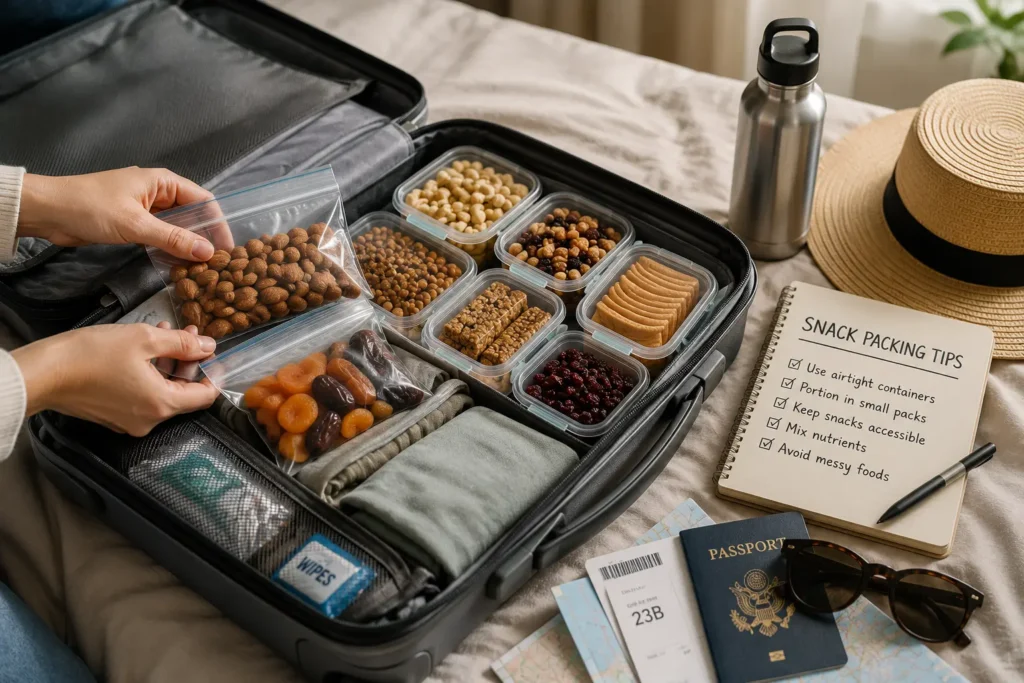
Even the best snacks can become inconvenient if they are not stored properly. Organization plays a major role in ensuring food remains fresh and accessible throughout the journey.
Using airtight containers helps protect snacks from moisture and prevents spills inside your luggage. Dividing food into small portions also makes it easier to manage hunger at different points during the trip without opening large packages repeatedly. Keeping snacks in an easily accessible bag, rather than deep inside your main luggage, ensures convenience during travel.
Common Mistakes to Avoid
Many travelers unintentionally make food-related mistakes that reduce comfort during their journey. One of the most common is choosing snacks that spoil quickly or require refrigeration, which makes them impractical for long trips.
Another frequent mistake is relying entirely on buying food during travel, which is often expensive, inconsistent, and sometimes unhealthy. Poor organization of snacks can also lead to crushed, melted, or wasted food, reducing both efficiency and convenience.
Avoiding these mistakes helps create a smoother, more predictable, and more enjoyable travel experience.
In the end, choosing the right snacks travel options is not a minor detail it is an essential part of smart travel planning. When you rely on healthy, non-perishable foods, you gain more than just convenience; you gain control over your energy, comfort, and overall travel experience.
A well-planned snack strategy ensures that hunger never becomes a problem, allowing you to focus on enjoying your journey instead of worrying about your next meal.
l