





Overpacking rarely feels like a mistake when you are doing it.
In fact, it usually feels responsible. You are trying to be prepared, especially when traveling with kids. You think about unexpected weather, spills, mood changes, or anything that could go wrong, and adding “just one more item” starts to feel like the safe choice.
The problem is that this mindset quietly builds a suitcase that is heavier, harder to manage, and often less useful than you expected.
Avoiding overpacking is not about discipline or strict rules. It is about changing how you make decisions before anything goes into your suitcase.
Why Families Naturally Overpack
When you travel alone, forgetting something is rarely a big issue. You adapt, buy what you need, or simply go without it.
With kids, the pressure feels different. Small problems can quickly turn into stressful situations, so parents try to eliminate risk in advance. This leads to packing for possibilities instead of reality.
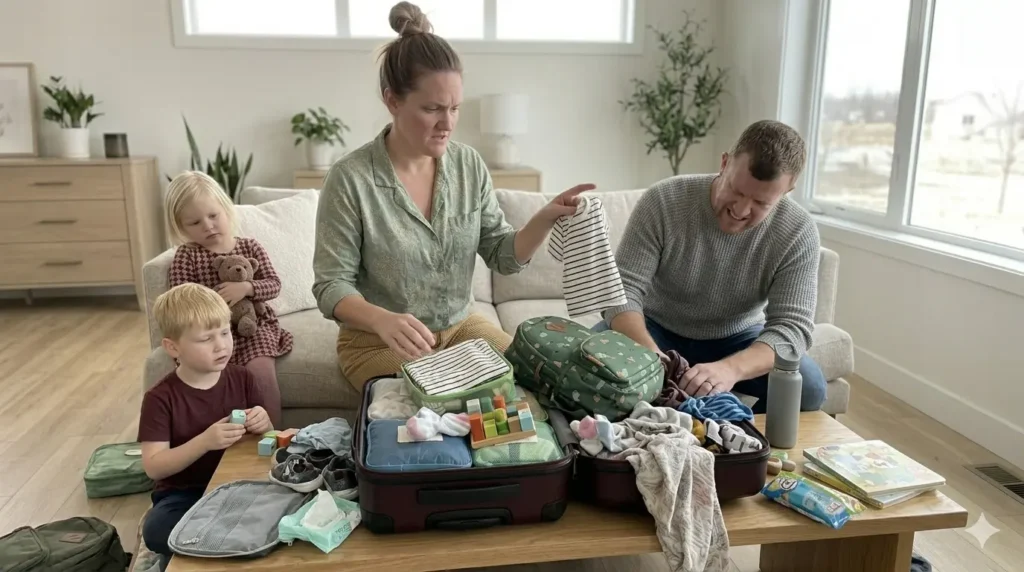
Another reason is uncertainty. When the plan is not clear, or when you are visiting a new place, your brain fills the gaps with “what if” scenarios. Each scenario adds one more item to your bag.
Overpacking is not random. It is a natural reaction to wanting control in an uncertain situation.
The Shift That Changes Everything: Pack for Real Days
The most effective way to avoid overpacking is not by forcing yourself to bring fewer items, but by changing how you think about your trip before you even open your suitcase.
Instead of trying to prepare for every possible situation, it helps to focus on what a normal day during your trip will actually look like. From morning routines to evening activities, most travel days follow a simpler pattern than we imagine.
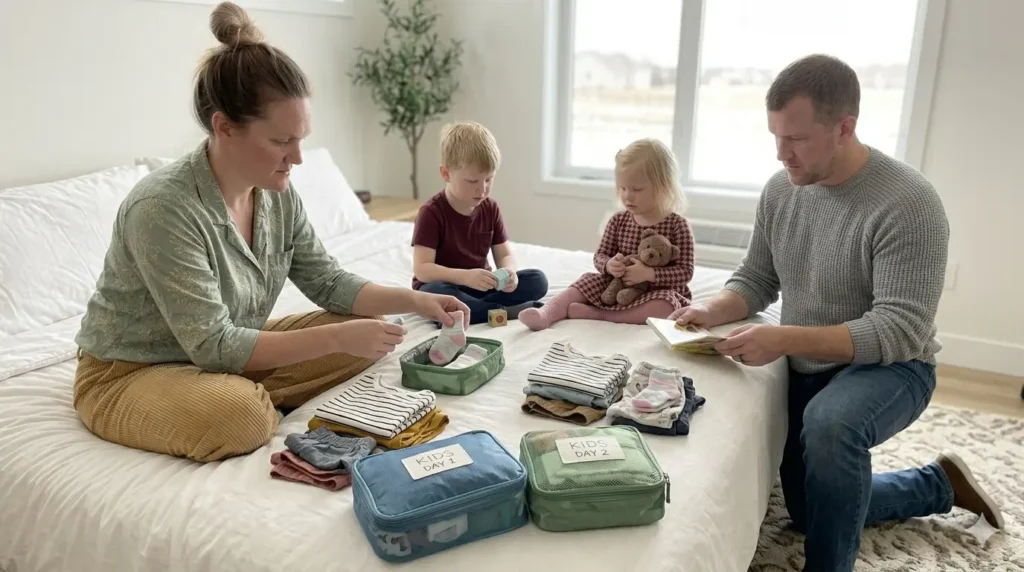
When you base your packing decisions on these realistic daily routines, many “just in case” items naturally lose their importance. You begin to notice that you don’t need multiple backup options for the same situation, or several variations of items you will only use once. This shift doesn’t remove flexibility, it removes unnecessary duplication.
It also creates a clearer decision-making process. Rather than asking yourself whether something might be useful, you start asking whether it fits into a real moment you expect to experience. If the answer is unclear, the item is often not essential. Over time, this way of thinking becomes automatic, making packing faster, simpler, and far less stressful without sacrificing comfort or preparedness.
Use Limits to Make Decisions Easier
One of the most effective ways to avoid overpacking is to set simple limits before you start.
Without limits, every decision becomes emotional. You keep adding items because there is no clear stopping point. When you define boundaries, decisions become faster and more objective.
This does not need to be complicated. It can be as simple as deciding how many outfits each person gets, how many pairs of shoes are enough, or how much space you are willing to use.
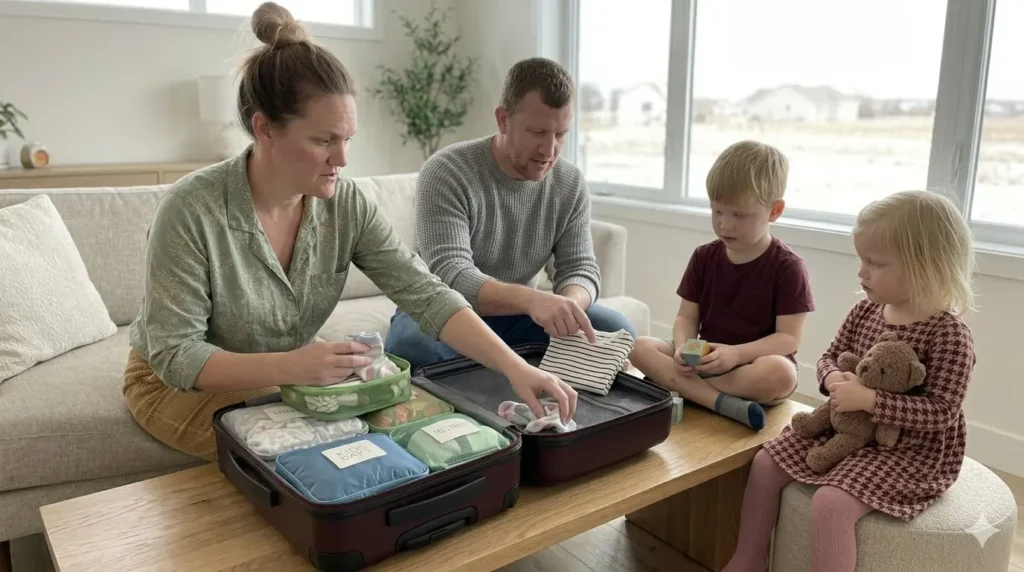
These limits act as a filter. Instead of asking “should I pack this,” you start asking “does this fit within the system I already decided.”
If you want to build a structure around this approach, you can revisit How to Pack a Suitcase for a Family Trip and apply these limits directly during the packing process.
The Hidden Trap: Packing for Comfort vs Control
Many families believe they are packing for comfort, but in reality, they are packing for control. Comfort comes from having what you actually use. Control comes from trying to be ready for everything.
The difference is subtle, but it changes everything. When you pack for control, you add items to reduce anxiety. When you pack for comfort, you choose items that improve your daily experience.
This is why a smaller, well-thought-out suitcase often feels easier to use than a larger one filled with options. You spend less time searching, less time deciding, and more time enjoying the trip.
Rewearing and Laundry Are Part of the Plan
One of the biggest reasons families overpack is the assumption that every outfit must be used once and only once.
In reality, most trips do not require that level of variety. Rewearing clothes is normal, especially for items that are not heavily used. When you accept this, the number of items you need drops significantly.
Planning for one simple laundry moment during your trip can completely change your packing strategy. Instead of preparing for every day separately, you prepare for a shorter cycle that you repeat.
This approach gives you flexibility without increasing the size of your luggage. It also makes packing feel more manageable, especially on longer trips.
Shoes and “Just in Case” Items Add Up Faster Than You Think
If you look closely at most overpacked suitcases, you will usually find the same pattern. Too many shoes, and too many items that are there “just in case.”
Shoes take up more space than almost anything else, and they are often packed without clear reasoning. The same goes for extra clothing that is rarely used.
Reducing these categories alone can make a noticeable difference. When you focus on what will actually be used, you naturally remove what is only there for reassurance.
If you want a more structured way to apply this, you can explore How to Pack Light with Kids, where these decisions are broken down in a practical way.
Pack Once, Use Many Times
A common mistake is thinking of packing as preparing for different moments separately.
In reality, the most efficient packing systems rely on items that serve multiple purposes.
Clothing that can be worn in different settings, simple layers that adapt to changing weather, and essentials that work across multiple days.
This approach reduces the total number of items without reducing your options. It also makes your suitcase easier to manage because everything inside has a clear role.
Recognize When You Are Adding Stress Instead of Removing It
There is a point where adding more items stops helping and starts creating problems.
Heavy luggage slows you down, makes transitions harder, and adds pressure during the trip. It affects simple things like moving between locations, unpacking, and even finding what you need during the day.
When packing starts to feel complicated, it is often a sign that you are adding too much.
A simpler system is not just lighter. It is easier to use, easier to maintain, and much more aligned with how travel actually feels in real life.
Avoiding overpacking is not about packing less for the sake of it. It is about packing better.
When you focus on real daily needs, accept that not everything needs a backup, and build a simple system that works for your family, the entire experience becomes easier.
You will still adjust things with every trip, and that is part of the process. What matters is that you move from reacting to uncertainty to planning with clarity.
And once you reach that point, packing stops being a stressful task and becomes a simple step in preparing for a smoother, more enjoyable trip.